Produce a Podcast with AI
Use AI to handle the time-consuming parts of podcast production — research, show notes, episode outlines, guest prep, transcription editing, and promotional content. Spend more time on conversations and less time on logistics.
Tools You'll Need
MCP Servers for This Scenario
Browse all MCP servers →- 1
Develop Your Podcast Concept and Format
Build a clear, differentiated podcast concept before recording anything. The market is crowded — shows with a distinct perspective and format attract and retain listeners; generic shows don't.
Help me develop a distinctive podcast concept that has a real chance of building an audience. I don't want a generic 'me too' show — I want something with a clear reason to exist.

**My starting point:**
- Topic area I want to cover: [e.g., "Personal finance for creative freelancers", "Entrepreneurship in Southeast Asia", "History of design", "Parenting while building a business"]
- My background and credibility: [What makes you qualified or positioned to talk about this topic? — e.g., "15 years in the industry", "Personal experience with X", "Access to interesting guests", "Unique perspective from Y"]
- Target listener: [Who specifically — the more specific the better — e.g., "Early-career UX designers at tech companies", "First-generation immigrant entrepreneurs", "Stay-at-home parents re-entering the workforce"]
- Competitors / shows I admire: [List 3-5 podcasts you like or that cover similar ground]
- What I DON'T want to do: [e.g., "I don't want long-form interviews", "I don't want to be just another news commentary show", "I don't want to cover things every other show covers"]

**Please help me develop:**

1. **Concept differentiation:**
   - What angle or perspective makes my show different from the 3-5 competitors I listed?
   - What is the specific gap in the market my show fills?
   - What is my show's 'one sentence promise' to listeners — what will they consistently get from every episode?

2. **Show format options:**
   Present 3 different format options for my concept, each with:
   - Format type (solo, co-host, interview, narrative, hybrid)
   - Ideal episode length and why
   - How often I should publish to maintain consistency
   - Pros and cons for MY specific situation (production resources, skills, time)
   - Which format you recommend and why

3. **Episode structure template:**
   For the recommended format, design a repeatable episode structure:
   - Intro and hook (time: X sec/min)
   - Segment 1: [NAME] (time)
   - Segment 2: [NAME] (time)
   - Segment 3: [NAME] (time)
   - CTA and outro (time)
   - Total running time

4. **Positioning statement:**
   Help me write a 2-3 sentence show description that: explains what the show is, who it's for, and what makes it different — suitable for Apple Podcasts, Spotify, and my website.

5. **Honest assessment:**
   - What would make this show fail, and how do I avoid it?
   - Realistic growth expectations for a new podcast in this space
   - Is my topic too broad, too narrow, or about right for the format I'm considering?
Tip: The most common podcast failure is 'wide and shallow' — covering too broad a topic without a specific point of view. Pick a narrower niche than feels comfortable. You can always expand later.
Tip: Your format must match your actual production capacity. A highly produced narrative show that requires 20 hours per episode will die within 3 months if you have a day job.
Tip: Episode length should be dictated by content, not convention. A 22-minute tightly edited show beats a 60-minute padded show for most topics. Don't pad to hit an arbitrary length target.
- 2
Research and Outline Episodes
Use AI to research episode topics thoroughly and build detailed outlines before you hit record. Well-researched, structured episodes sound more professional and require less editing.
Help me research and outline an episode of my podcast. I want to be thoroughly prepared so the recording sounds confident and well-organized.

**Episode details:**
- Show name: [YOUR SHOW]
- Episode topic: [SPECIFIC TOPIC — be as specific as possible]
- Episode type: [SOLO / INTERVIEW / CO-HOST DISCUSSION / NARRATIVE]
- Target length: [e.g., "25-30 minutes", "45-60 minutes"]
- My episode hook (why should someone listen to this specific episode): [e.g., "A counterintuitive insight", "A story most people don't know", "A practical skill they'll be able to use immediately"]

**If interview episode:**
- Guest name and bio: [NAME, CREDENTIALS, WHAT THEY'VE DONE]
- Why this guest for this topic: [Their specific expertise or angle]
- Their recent work to reference: [BOOKS, PROJECTS, NEWS]

**Please provide:**

1. **Topic research brief:**
   Research [the episode topic] and provide:
   - 5-7 key facts, statistics, or insights I should know before recording
   - 2-3 common misconceptions or controversies around this topic
   - What is happening in this space right now (recent developments)
   - 3 expert perspectives on this topic (cite real names and sources)
   - The most interesting or surprising angle on this topic that most people don't know

2. **Episode outline:**
   Structure my episode using my show's template ([DESCRIBE YOUR TEMPLATE FROM STEP 1]) with:
   - Opening hook (first 60 seconds): A specific compelling line or story to open with
   - Context and stakes: Why does this topic matter to my specific listener? (30-60 sec)
   - Main content: 3-4 key sections with bullet points for each
   - Specific stories, examples, or data points to use in each section
   - Transitions between sections
   - CTA and outro: What should I ask listeners to do?

3. **If interview: Guest question set:**
   - 5-7 substantive questions that would be interesting to the listener (not just to me)
   - 2-3 follow-up probes for common dead-end answers
   - One 'uncomfortable but important' question that would make the episode memorable
   - Opening question that immediately gets them talking substantively (not 'tell us about yourself')
   - Closing question that works for any guest: [e.g., 'What question should I have asked?']

4. **Listener takeaway:**
   After this episode, what is the one thing I want every listener to remember, feel, or do? Write this as a guiding statement I keep in front of me during recording.

5. **Episode title options:**
   Write 5 different episode title options: clear, specific, and benefit/curiosity-driven. Not clickbait — titles that accurately represent the value inside.
Tip: Use Perplexity for research on this step — it cites sources, which you can verify before stating facts on air. Podcasts build trust on accuracy.
Tip: Your episode outline is a guide, not a script. Have the key points visible during recording but don't read it line by line. Audiences hear the difference between a conversation and a performance.
Tip: The most memorable podcast moments come from specificity. 'The company was almost bankrupt in 2003' lands harder than 'the company faced challenges.' Push for specifics in your research and in your guest interviews.
- 3
Write Show Notes and Episode Description
Transform your recorded episode into comprehensive show notes, timestamps, and an SEO-optimized description that helps new listeners discover your show and helps existing listeners reference it.
Help me write comprehensive show notes and an episode description for my podcast episode. **Episode details:** - Show: [SHOW NAME] - Episode number: [#X] - Episode title: [TITLE] - Guest (if applicable): [NAME, TITLE, WEBSITE] - Recording date: [DATE] - Target publish date: [DATE] **Episode summary:** [Paste a rough summary of what was covered, or paste the episode transcript if you have one. Even rough notes are fine.] **Key moments/topics covered:** [List the main discussion points in order] **Resources mentioned:** [List any books, tools, websites, people, or research mentioned during the episode] **Please create:** 1. **Episode description (300-400 words):** - Opening hook (2 sentences that make a potential listener need to hear this episode) - Episode summary: what was discussed and why it matters - 3-5 key things listeners will learn or take away - Guest bio (if applicable): 2-3 sentences, written in third person, focused on what's relevant to this episode - CTA: how to connect with the guest (social/website) and how to support the show - Optimized for Apple Podcasts, Spotify, and search engines 2. **Show notes with timestamps:** Format: [MM:SS] — Description of what happens at this point - Include timestamps for: intro, major topic transitions, key insights or stories, any resources mentioned, and outro/CTA - Each timestamp description should be specific enough to be useful ("[15:30] Why the standard advice on X is wrong and what actually works" not "[15:30] Discussion about X") 3. **Key quotes:** - 5-7 compelling quotes or soundbites from the episode - Each formatted as a pull quote with attribution - Mark which 2 are best for social media sharing 4. **Resources and links section:** Organized list of everything mentioned in the episode: - Books (with Amazon link placeholder) - Tools and apps - Websites and articles - People and organizations mentioned - Guest's links (website, social, book, etc.) 5. **SEO keywords:** - 5-8 primary keywords this episode should rank for - 3-5 long-tail phrases potential new listeners would search - Natural places to include these keywords in the descriptionTip: Show notes are the primary SEO asset for podcast discoverability. Treat them as a web article, not an afterthought. Detailed, keyword-rich show notes help people find your episodes months and years after publication.
Tip: Timestamps are the most underused feature in show notes. Specific timestamps with descriptive labels significantly increase listen time — people jump to the part most relevant to them rather than not starting at all.
Tip: Write your episode description to stand alone without the audio. Someone who has never heard your show should be able to understand the value of this episode from the description alone.
- 4
Create Promotional Content for Every Episode
Turn each episode into a full suite of promotional assets — social media posts, newsletter teaser, audiogram script, and platform-specific copy. One episode should generate multiple weeks of content.
Create a complete promotional content suite for my podcast episode. I want to maximize the reach of each episode without spending hours on social media content creation.

**Episode context:**
- Show name: [SHOW NAME]
- Episode title: [TITLE]
- Guest (if applicable): [NAME]
- Key topics: [LIST FROM STEP 2]
- Best quotes from episode: [FROM STEP 3]
- Target audience: [FROM STEP 1]
- Social platforms I'm active on: [LIST: e.g., "Instagram, LinkedIn, X (Twitter), TikTok"]
- Email newsletter: [YES / NO]

**Please create:**

1. **Social media post set — 5 posts per platform I listed:**
   For each platform, write 5 different posts using different angles:
   - Post 1: Direct quote from the episode (format for the platform)
   - Post 2: Counterintuitive insight or hot take from the episode
   - Post 3: Practical tip or lesson framed as a list (great for saves/shares)
   - Post 4: Behind-the-scenes or personal angle (humanizes the show)
   - Post 5: Question that starts a conversation related to the episode topic

   Include: exact post copy, relevant hashtags (research-based, not generic), and whether an image/audiogram would improve this post.

2. **Platform-specific formatting:**
   - X/Twitter: Thread version of the best insight (8-12 tweets), and a single-tweet version
   - LinkedIn: Longer, more professional angle suitable for a professional audience
   - Instagram: Caption + 5 suggested hashtag groups + description of what image/reel would pair well
   - TikTok/Reels script: 45-60 second spoken hook for a short video teaser (if I cover the topic myself)

3. **Email newsletter teaser:**
   A 150-200 word newsletter blurb that: creates curiosity, delivers one piece of value immediately, and compels subscribers to click through to the full episode. Not a summary — a teaser.

4. **Audiogram script:**
   A 60-90 second script for an audiogram (audio clip with text visualization):
   - Opening hook line
   - The most compelling 45-60 second excerpt from the episode
   - Closing CTA: "Full episode in the link in bio" / "Listen at [show name] wherever you get podcasts"

5. **Re-promotion schedule:**
   A 4-week content calendar showing when to post each piece of content for maximum spread, including re-sharing older promotional content in later weeks.
Tip: Batch your social content creation for all upcoming episodes in one AI session. You'll produce 4-6 episodes worth of promotional content in 2 hours instead of spending 30 minutes per episode per week.
Tip: The best performing podcast social content gives immediate value — a usable insight, a memorable quote, a surprising stat — rather than just telling people 'new episode out.' Give them a reason to share before they've listened.
Tip: Track which post types perform best for your show over 2-3 months and double down on those. Different audiences respond to different formats — there's no universal formula.
- 5
Edit Transcripts and Repurpose Content
Turn your podcast transcript into polished written content — blog posts, LinkedIn articles, and email content — that reaches audiences who don't listen to podcasts and improves your SEO.
Help me repurpose my podcast episode into high-quality written content. I want to reach audiences who don't listen to podcasts and get more mileage from each episode I produce.

**My episode:**
- Title: [EPISODE TITLE]
- Main topics covered: [LIST FROM STEP 2]
- Episode transcript or summary: [PASTE TRANSCRIPT OR DETAILED SUMMARY]
- Target audience for written content: [SAME AS PODCAST / SLIGHTLY BROADER]
- Platforms for written content: [e.g., "My blog", "Medium", "LinkedIn", "Substack", "Email newsletter"]

**Please create:**

1. **Full blog post (800-1200 words):**
   - Rewrite the episode as a standalone article — not a transcript dump, but a properly structured written piece
   - Original headline and meta description (for SEO)
   - Clear section headers (H2/H3 structure)
   - Written in first person or third person (my preference: [SPECIFY])
   - Key insights presented as scannable points within the narrative
   - Embedded pull quotes from the episode
   - Natural CTA to the podcast at the end
   - This should read as a complete article even for someone who never listens to the podcast

2. **LinkedIn article version (500-700 words):**
   - Professional framing for a business/career audience
   - Stronger point-of-view and editorial angle
   - Structured for LinkedIn's reading format (shorter paragraphs, occasional bold for emphasis)
   - 3-5 key lessons framed as professional takeaways

3. **Email deep-dive (400-500 words):**
   - Conversational tone for email subscribers
   - One main insight expanded in depth (not a summary of everything)
   - Personal angle: why does this insight matter to me/us specifically?
   - Feels like a letter, not marketing copy

4. **Short-form content extraction:**
   - 5 standalone insights from the episode that could each become a single LinkedIn post or tweet thread (without needing podcast context)
   - For each: the insight stated clearly + why it matters + 1 actionable implication

5. **SEO optimization for blog post:**
   - Primary keyword and 3-5 secondary keywords to incorporate
   - Suggested internal links (to other episodes or pages on your site — placeholder format OK)
   - Suggested external links to authoritative sources mentioned in the episode
   - Alt text for any images I might add
Tip: Do not publish your raw transcript as a blog post. Spoken language looks terrible as written text — full of filler words, incomplete sentences, and circular logic that sounds natural but reads poorly.
Tip: The best written repurposing takes ONE insight from the episode and goes deeper on it, rather than trying to summarize everything. A focused 800-word essay on one idea outperforms a summary of 10 ideas.
Tip: Repurposed content is most effective when it links back to the episode but is also fully valuable on its own. A reader who gets value from the article becomes a listener; a reader who hits a 'listen to find out' wall just leaves.
Recommended Tools for This Scenario

ChatGPT
The AI assistant that started the generative AI revolution
- GPT-4o multimodal model with text, vision, and audio
- DALL-E 3 image generation
- Code Interpreter for data analysis and visualization

Claude
Anthropic's AI assistant built for thoughtful analysis and safe, nuanced conversations
- 200K token context window for massive document processing
- Artifacts — interactive side-panel for code, docs, and visualizations
- Projects with persistent context and custom instructions

Perplexity
AI-powered search engine that answers questions with cited sources
- Real-time web search with inline source citations
- Pro Search multi-step deep research automation
- Multiple model options (Sonar, GPT-4o, Claude)
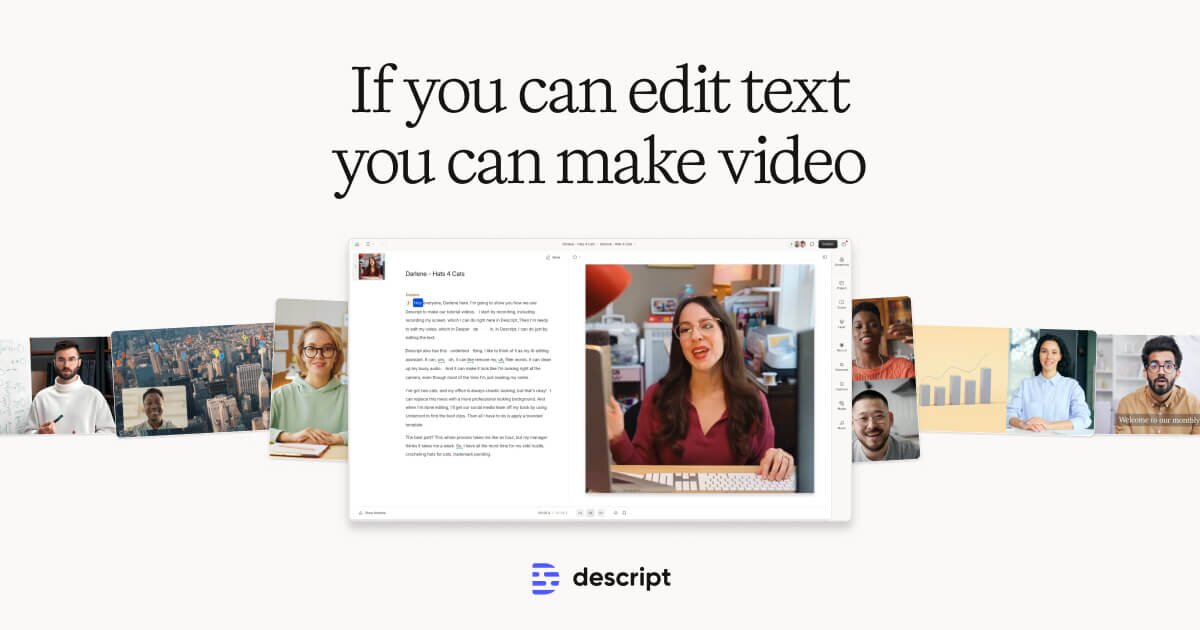
Descript
Edit video by editing text — transcript-based video and podcast editor
- Transcript-based video and audio editing
- Automatic filler word detection and removal
- AI eye contact correction for webcam footage
Frequently Asked Questions
How much time does AI actually save in podcast production?
What tools do I actually need to start a podcast?
How do I grow a podcast audience?
Agent Skills for This Workflow
Get More Scenarios Like This
New AI guides, top MCP servers, and the best tools — curated weekly.