6 Best AI Platforms for Finance Agent Skills (2026)
Disclosure: Some links earn us a commission at no extra cost to you. Rankings are independent — tools cannot pay for placement.
A curated guide to the best AI platforms that support finance agent skills — from smart contract auditing and portfolio analysis to payment integration, compliance checking, and financial modeling.
Our Top Picks

Claude Code
Paid
Anthropic's agentic CLI for autonomous terminal-native coding workflows
- Terminal-native autonomous coding agent
- Full file system and shell access for multi-step tasks
- Deep codebase understanding via repository indexing

Cursor
Freemium
AI-native code editor with deep multi-model integration and agentic coding
- AI-native Cmd+K inline editing and generation
- Composer Agent for autonomous multi-file changes
- Full codebase indexing and context awareness
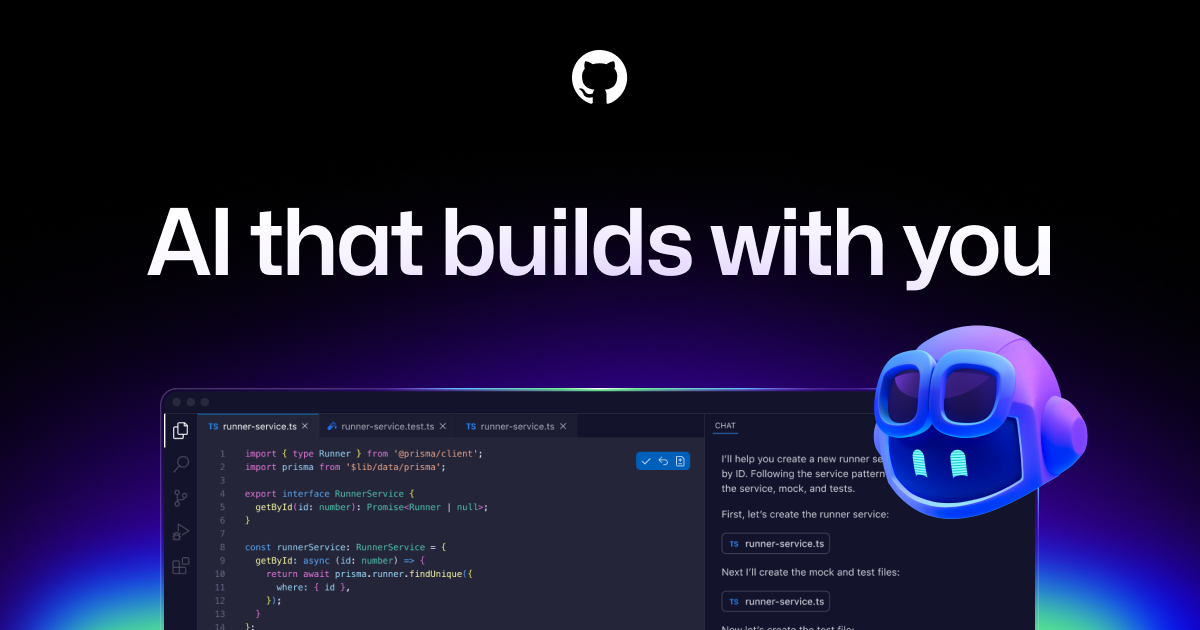
GitHub Copilot
Freemium
AI pair programmer that suggests code in real time across your IDE
- Real-time code completions across 30+ languages
- Copilot Chat for natural language code Q&A
- Pull request description and summary generation

Devin
Paid
First autonomous AI software engineer with full development environment
- Fully autonomous end-to-end software development
- Sandboxed environment with shell, editor, and browser
- Asynchronous task delegation via Slack-like interface

Cline
Open Source
Autonomous coding agent in VS Code with human-in-the-loop approval flow
- Human-in-the-loop approval for every action
- Multi-model support (Claude, GPT, Gemini, local models)
- File creation, editing, and deletion across projects

Windsurf
Freemium
AI-native IDE with agentic Cascade for multi-step autonomous coding
- Cascade agentic coding for multi-step autonomous tasks
- Supercomplete next-action prediction
- Flows for persistent multi-turn context
Why Agent Skills Are Critical for Finance Applications
Finance is one of the highest-stakes domains for AI agent skills. A bug in a payment integration can lose real money. A missed vulnerability in a smart contract can be exploited for millions. An incorrect compliance implementation can result in regulatory penalties. The margin for error is zero, which makes the choice of AI platform more consequential here than in almost any other skill category.
The platforms that succeed in finance share common traits: they can reason about complex logic with precision, they support multi-file codebase analysis (because financial systems are never single-file), and they provide transparent output that humans can audit before deployment. Agent skills like Smart Contract Auditor, Payment Integrator, and Compliance Checker require not just code generation but domain-specific judgment about security, edge cases, and regulatory requirements.
This guide evaluates platforms specifically through the lens of finance — where correctness, auditability, and security matter more than speed or convenience.
Top Finance Agent Skills to Know
Smart Contract Auditor
The Smart Contract Auditor skill analyzes Solidity, Rust (Anchor/Solana), and Move smart contracts for vulnerabilities — reentrancy attacks, integer overflow, access control flaws, oracle manipulation, flash loan exploits, and economic design weaknesses. This is arguably the highest-value agent skill in finance because smart contract exploits are irreversible and often catastrophic. Claude Code is the strongest platform here because it can read an entire protocol's contract suite, understand cross-contract interactions, and identify vulnerabilities that only emerge from the interplay between multiple contracts.
Portfolio Analyzer
The Portfolio Analyzer skill evaluates investment portfolios across multiple dimensions — asset allocation, risk exposure, correlation analysis, historical performance attribution, and rebalancing recommendations. The skill processes financial data, applies quantitative models, and produces actionable insights rather than raw statistics. Claude Code and Cursor generate the analysis code, while GitHub Copilot accelerates the implementation of specific financial calculations like Sharpe ratios, maximum drawdown, and Value at Risk.
Payment Integrator
The Payment Integrator skill implements payment processing systems — Stripe checkout flows, cryptocurrency payment gateways, subscription billing, refund handling, and webhook processing. This skill demands precision: incorrect decimal handling, missing idempotency keys, or improper webhook verification can cause financial discrepancies. Claude Code handles the full integration including database schema design, error recovery logic, and reconciliation systems. Cursor provides rapid iteration on the UI components of checkout flows.
Budget Analyzer
The Budget Analyzer skill processes financial data to track spending patterns, forecast future expenses, identify cost-saving opportunities, and generate variance reports. For businesses, this extends to departmental budget tracking, vendor cost analysis, and capital expenditure planning. The skill requires both data processing capability and financial domain knowledge to produce insights rather than just tables. Claude Code generates the complete analysis pipeline from data ingestion to report output.
ROI Calculator
The ROI Calculator skill builds financial models that quantify return on investment for projects, campaigns, investments, and business decisions. Beyond simple percentage calculations, production ROI models account for time value of money, risk-adjusted returns, opportunity costs, and sensitivity analysis across multiple scenarios. Claude Code and Cursor generate interactive calculators with proper financial formulas, while Windsurf handles the multi-file coordination when the calculator integrates with existing financial systems.
Invoice Generator
The Invoice Generator skill produces professional invoices with proper tax calculations, multi-currency support, line-item detail, and compliance with regional invoicing regulations (EU VAT requirements, US sales tax, etc.). The best implementations integrate with accounting systems, track payment status, and generate recurring invoices automatically. Claude Code builds the complete invoicing system including PDF generation, email delivery, and payment status tracking.
Compliance Checker
The Compliance Checker skill audits codebases and business logic against regulatory requirements — KYC/AML for financial services, GDPR for data handling, PCI DSS for payment processing, and MiCA for crypto operations in the EU. This is not just a checklist exercise; it requires understanding how regulations apply to specific implementation patterns. Claude Code's ability to read an entire codebase makes it the strongest platform for compliance analysis, identifying issues like unencrypted PII storage or missing audit trails that span multiple services.
Excel Analyzer
The Excel Analyzer skill reads, processes, and generates insights from spreadsheet data — a critical capability given how much financial work still lives in Excel. The skill handles formula auditing, data validation, pivot table generation, and conversion of spreadsheet logic into proper database-backed applications. Claude Code and Cursor both handle the data processing side, while GitHub Copilot accelerates the Python/pandas code that replaces manual Excel work.
Platform-by-Platform Review
1. Claude Code — Best for Financial System Architecture
Claude Code is the top choice for finance because it combines deep reasoning with full codebase access. For Smart Contract Auditor work, it reads entire protocol codebases and identifies cross-contract vulnerabilities. For Payment Integrator tasks, it generates the complete payment pipeline — API integration, webhook handling, database schema, error recovery, and reconciliation — with the precision that financial systems demand. Its ability to explain its reasoning makes the output auditable, which is non-negotiable in finance.
2. Cursor — Best for Financial UI Development
Cursor excels at building the user-facing layer of financial applications — trading dashboards, portfolio views, checkout flows, and analytics displays. Its real-time preview helps iterate on ROI Calculator interfaces and Budget Analyzer visualizations where the presentation of data matters as much as its accuracy. The Composer mode handles coordinated updates across the calculation logic, UI components, and test files simultaneously.
3. GitHub Copilot — Best for Financial Algorithm Implementation
Copilot's inline completion is fastest for implementing specific financial calculations — pricing models, risk metrics, statistical functions, and data transformations. When you're writing the quantitative core of a Portfolio Analyzer or the calculation engine behind an ROI Calculator, Copilot's familiarity with financial Python libraries (pandas, numpy, scipy) and its ability to suggest correct formula implementations from context saves significant development time.
4. Devin — Best for End-to-End Financial Feature Development
Devin's full autonomy makes it suited to complete financial features where the scope is well-defined: "build a Stripe subscription billing system with prorated upgrades and dunning" or "implement a token vesting contract with cliff and linear release." It provisions its own environment, installs dependencies, writes tests, and iterates until they pass. For Payment Integrator and Invoice Generator tasks with clear specifications, Devin can deliver a working implementation without checkpoints.
5. Cline — Best for Auditable Financial Agent Work
Cline's transparency is its killer feature for finance. Every tool call, every file read, every code generation step is visible and approvable. For Compliance Checker and Smart Contract Auditor work, where you need to verify not just the output but the reasoning process, Cline's step-by-step execution model provides the audit trail that regulators and security reviewers expect. Its open-source codebase also means you can verify there are no data leaks in your financial processing pipeline.
6. Windsurf — Best for Multi-Service Financial Systems
Windsurf's Cascade engine handles financial systems that span multiple services — a common pattern in production finance where payment processing, accounting, reporting, and compliance are separate but interconnected services. Its Payment Integrator and Compliance Checker implementations propagate changes consistently across all affected services in a single pass, preventing the inconsistencies that cause financial reconciliation nightmares.
How to Pick the Right Platform
- Smart contract security: Claude Code for deep cross-contract analysis, Cline for auditable process
- Payment systems: Claude Code for complete backend, Cursor for checkout UI
- Quantitative finance: GitHub Copilot for algorithm implementation speed
- Compliance auditing: Claude Code for codebase-wide analysis, Cline for transparent process
- Complete feature delivery: Devin for well-scoped autonomous implementation
- Multi-service coordination: Windsurf for cross-service consistency
- Financial dashboards: Cursor for data visualization iteration
Security Considerations for Finance Agent Skills
Finance demands additional caution with AI agents. Never give an agent write access to production financial databases. Use sandbox/testnet environments for Smart Contract Auditor testing. Implement human-in-the-loop approval for any Payment Integrator changes that affect real money flows. Store API keys and secrets in environment variables, never in code. Cline's approval-required mode and Claude Code's diff preview are essential safeguards — use them.
Frequently Asked Questions
Can AI agents reliably audit smart contracts for security vulnerabilities?
AI agents catch many common vulnerability patterns — reentrancy, integer overflow, access control issues — and are particularly good at finding vulnerabilities that span multiple contracts. However, they should complement, not replace, professional security audits for high-value contracts. The best practice is to use AI auditing (Claude Code, Cline) as a first pass that catches 70-80% of issues quickly and cheaply, then engage a specialized audit firm for the final review before mainnet deployment.
Which platform handles financial calculations with the highest precision?
All platforms generate code that uses the same underlying language precision (Python's decimal module, JavaScript's BigNumber libraries, Solidity's uint256). The key difference is whether the platform knows to use these precision-safe approaches by default. Claude Code consistently generates financial code with proper decimal handling, avoiding floating-point arithmetic for monetary values — a common error that less context-aware tools make.
How do I ensure AI-generated financial code meets regulatory requirements?
Use the Compliance Checker skill as a second pass after generating financial code. Claude Code can audit generated code against specific regulatory frameworks (PCI DSS, KYC/AML, GDPR). For critical systems, combine AI compliance checking with manual review by a compliance officer. Document the AI's compliance analysis as part of your audit trail — regulators increasingly accept AI-assisted compliance review when the process is transparent and documented.
Is it safe to use AI agents for cryptocurrency-related development?
Yes, with proper safeguards. Always develop and test on testnets before mainnet deployment. Never expose private keys or seed phrases to AI agents — use environment variables and hardware wallets for signing. Use Cline's transparent mode to verify every action the agent takes. For smart contracts, treat AI-generated code as a draft that requires formal verification and professional audit before handling real assets.
Disclosure: Some links on this page may be affiliate links. We may earn a commission if you make a purchase through these links, at no additional cost to you.