10 Best AI Automation & Agent Tools in 2026 (Compared)
A comprehensive comparison of the best AI automation and agent tools in 2026, covering workflow automation, AI agents, and no-code AI platforms.
Our Top Picks
Zapier
Freemium
Connect your apps and automate workflows with 7,000+ integrations
- 7,000+ app integrations with pre-built triggers and actions
- Multi-step Zaps with conditional branching (Paths)
- AI-powered workflow creation via natural language
- Zapier Central autonomous AI bots
- Built-in Tables database and Interfaces form builder

Make
Freemium
Visual automation platform with powerful branching logic for complex workflows
- Visual canvas-based scenario builder with 1,800+ app integrations
- Routers, iterators, and aggregators for complex branching logic
- HTTP/SOAP modules for connecting any REST or SOAP API
- Built-in data stores for persistent state between executions
- AI assistant for natural language scenario creation
n8n
Open Source
Open-source workflow automation with code-level flexibility
- 400+ built-in integration nodes
- Visual drag-and-drop workflow editor
- Custom JavaScript/Python code in any step
- AI Agent node with LLM orchestration and RAG support
- Self-hosting with Docker/Kubernetes support

Manus
Freemium
General-purpose AI agent that autonomously completes complex tasks end-to-end
- Autonomous task execution with real-time progress visibility
- Full computer environment: web browsing, code execution, file management
- Multi-step planning with adaptive problem-solving
- Research synthesis across multiple web sources
- Code writing, execution, and debugging in sandboxed environment

Dify
Open Source
Open-source platform for building LLM apps with visual agent workflows
- Visual workflow editor for AI agent and pipeline design
- RAG knowledge base with multi-format document ingestion
- Support for 100+ LLM providers including local models via Ollama
- Agent mode with autonomous tool selection and execution
- Prompt engineering IDE with variable management and versioning
LangChain
Open Source
The leading framework for building LLM-powered applications and agents
- Composable chains and agents with LCEL declarative syntax
- LangGraph for stateful multi-agent orchestration
- RAG pipelines with 100+ document loaders and vector store integrations
- LangSmith for tracing, debugging, and evaluation
- Support for all major LLM providers and open-source models
UiPath
Freemium
Enterprise RPA leader integrating AI agents for end-to-end automation
- Visual RPA Studio for designing software robots without code
- AI-powered Document Understanding for invoice and form extraction
- Orchestrator for centralized robot management and scheduling
- Process Mining and Task Mining to discover automation opportunities
- Attended and unattended robot deployment modes
AutoGPT
Open Source
Pioneering autonomous AI agent platform with 170K+ GitHub stars
- Autonomous goal decomposition and task execution
- Web browsing and information gathering capabilities
- Code writing and execution in sandboxed environments
- File management and document creation
- Plugin system for extending agent capabilities

CrewAI
Open Source
Multi-agent orchestration framework with role-based collaboration
- Role-based agent definition with goals and backstories
- Sequential, hierarchical, and consensual process orchestration
- Agent-to-agent task delegation and collaboration
- Shared memory across agents within a crew
- Custom tool integration and LangChain compatibility
Bardeen
Freemium
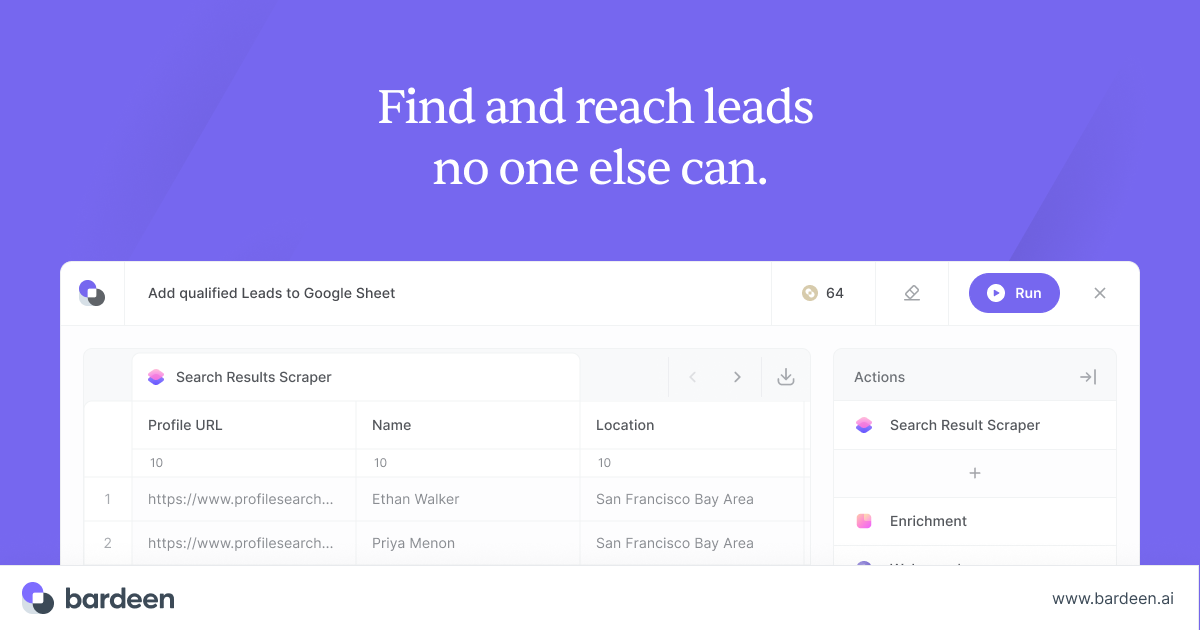
Browser-based AI automation for scraping, workflows, and sales ops
- Chrome extension for in-browser automation
- No-code web scraper for extracting structured data
- AI-powered data enrichment, classification, and summarization
- Magic Box natural language automation creation
- Pre-built Playbook library for common workflows
Why AI Automation and Agents Are the Next Productivity Leap
AI automation tools have evolved from simple if-this-then-that triggers to intelligent agents that can reason about tasks, make decisions, and execute complex multi-step workflows autonomously. The combination of large language models with automation platforms has created a new category of tools that handle everything from data processing to customer communication with minimal human intervention.
The landscape includes traditional workflow automation platforms enhanced with AI, purpose-built AI agent frameworks, and no-code platforms that let anyone build AI-powered automations. The right choice depends on your technical sophistication, scale requirements, and whether you need visual builders or code-first flexibility.
Our Top Picks at a Glance
Zapier leads in ease of use and integration breadth. Make offers the most powerful visual automation builder. n8n is the best self-hosted open-source option. Manus delivers the most capable general-purpose AI agent. LangChain provides the most flexible framework for developers building custom AI agents.
Detailed Reviews
1. Zapier — Best for Integration Breadth
Zapier connects over 7,000 apps and has added AI capabilities throughout its platform. AI features include natural language workflow creation, automated data transformation, and AI-powered actions that can summarize, classify, and generate content within workflows. Its simplicity makes it accessible to non-technical users. The free tier handles basic automations, with paid plans starting at $19.99/month for more complex workflows.
2. Make — Best Visual Automation Builder
Make (formerly Integromatic) offers the most powerful visual workflow builder with superior handling of complex logic, branching, and error handling. Its AI modules integrate LLMs into workflows for content generation, data extraction, and decision-making. The visual canvas makes complex automations easier to understand and maintain. More affordable than Zapier for high-volume automations.
3. n8n — Best Self-Hosted Automation
n8n provides a powerful open-source workflow automation platform that you can self-host for complete data control. Its AI agent capabilities, extensive node library, and code-when-needed flexibility make it ideal for technical teams. The self-hosted option means no per-execution pricing, making it extremely cost-effective at scale. Cloud-hosted plans are also available.
4. Manus — Best General-Purpose AI Agent
Manus represents the cutting edge of autonomous AI agents, capable of browsing the web, using tools, writing and executing code, and completing complex multi-step tasks with minimal guidance. It handles research, data analysis, and content creation tasks that would typically require hours of human effort. Still evolving but already impressive for suitable use cases.
5. Dify — Best Open-Source AI App Builder
Dify provides a visual platform for building AI applications, chatbots, and agents without deep technical expertise. Its workflow editor, RAG pipeline builder, and agent tools let teams prototype and deploy AI applications quickly. The open-source nature means you can self-host and customize freely. Cloud plans are available for teams that prefer managed hosting.
6. LangChain — Best Developer Framework
LangChain is the most widely adopted framework for building LLM-powered applications and agents. It provides abstractions for chains, agents, tools, and memory that simplify complex AI application development. The ecosystem includes LangSmith for monitoring and LangGraph for building stateful agents. Essential for developers building custom AI solutions. Completely open source.
7. UiPath — Best for Enterprise RPA
UiPath leads the enterprise robotic process automation market and has integrated AI throughout its platform. AI features include document understanding, process mining, and intelligent automation that combines traditional RPA with LLM capabilities. Its enterprise-grade security, governance, and audit features make it the choice for large organizations with strict compliance requirements.
8. AutoGPT — Best for Experimental Autonomous Agents
AutoGPT pioneered the concept of autonomous AI agents that can break down goals into tasks and execute them independently. While still experimental, it demonstrates the potential of agents that can browse the web, write code, and manage files with minimal human oversight. Best suited for experimentation and understanding where autonomous agents are headed.
9. CrewAI — Best for Multi-Agent Systems
CrewAI specializes in orchestrating teams of AI agents that collaborate on complex tasks. Each agent can have specialized roles, tools, and goals, working together like a virtual team. Ideal for workflows that require different perspectives or expertise areas, such as research, writing, and review pipelines. Open source with an intuitive Python API.
10. Bardeen — Best for Browser Automation
Bardeen focuses on automating repetitive browser-based tasks with AI. Its Chrome extension can scrape data, fill forms, move information between web apps, and trigger workflows based on browser activity. The AI features let you describe automations in natural language. Excellent for sales teams, recruiters, and anyone doing repetitive work in the browser.
How We Chose These Tools
We built real automation workflows with each tool, testing integration reliability, AI capability quality, error handling, and scalability. We evaluated both no-code and code-first approaches, and measured the time from concept to working automation for comparable use cases.
Key Considerations When Choosing
- Technical requirements: Visual builders vs. code-first frameworks serve different audiences
- Hosting model: Self-hosted options provide data control; cloud options reduce operational burden
- Integration coverage: Verify that your critical apps are supported with reliable connectors
- Execution pricing: Per-execution vs. unlimited pricing dramatically affects cost at scale
- Error handling: Robust error handling and retry logic are critical for production automations
- Monitoring and debugging: Look for logging, alerting, and debugging tools
- Security and compliance: Enterprise users need audit trails, role-based access, and data encryption
Subscribe to these tools with crypto
Use your Coda One virtual card to pay for any AI tool subscription with USDT, USDC, or BTC.
Get Your CardFrequently Asked Questions
What is the difference between AI automation and AI agents?
AI automation follows predefined workflows with AI-enhanced steps (like using AI to classify an email before routing it). AI agents are more autonomous, capable of reasoning about goals, breaking them into tasks, and deciding which actions to take. Automation is more predictable; agents are more flexible but less deterministic.
Which is better, Zapier or Make?
Zapier has more integrations (7,000+ vs 1,700+) and is simpler to use. Make is more powerful for complex logic, better at handling errors, and more affordable at high volumes. Choose Zapier for simplicity and breadth; choose Make for complex, high-volume workflows.
Can I build AI automation without coding?
Absolutely. Zapier, Make, Dify, and Bardeen all offer visual, no-code interfaces for building AI-powered automations. You can create sophisticated workflows that include AI classification, content generation, and decision-making without writing a single line of code.
Disclosure: Some links on this page may be affiliate links. We may earn a commission if you make a purchase through these links, at no additional cost to you.