Write an Academic Essay with AI
Produce a rigorous, well-structured academic essay using AI as a research and drafting assistant — not as a ghostwriter. This workflow maintains academic integrity while using AI to sharpen your argument, improve your writing, and catch structural problems before submission.
Tools You'll Need
MCP Servers for This Scenario
Browse all MCP servers →- 1
Research and Develop Your Argument
Use AI to explore a topic broadly, identify the key debates and positions, and develop your own original thesis — the argument only you will make.
I'm writing an academic essay on [topic] for a [course name/level] course. Help me develop my argument.

**Assignment details**: [e.g., '2,500-word argumentative essay arguing a position on X topic. Must engage with at least 5 scholarly sources. MLA/APA/Chicago citation style.']

**Topic area**: [describe the general topic]
**My initial hunch or position**: [what you already think, even if vague]

Help me develop the argument:

1. **Key Debates**: What are the 3-5 major scholarly debates or positions within this topic? For each debate, describe:
   - The two or more main positions scholars take
   - The key thinkers or schools of thought associated with each position
   - What evidence or arguments anchor each position
   - Where there is genuine unresolved disagreement

2. **Thesis Development**: Based on the debates, help me develop a defensible thesis. An academic thesis must: (a) make a claim that someone could reasonably disagree with, (b) be specific enough to be argued in [word count] words, (c) add something to the conversation — not just restate what scholars already agree on. Give me 5 thesis statement options based on what I've said, from most conventional to most original. I'll choose and adapt.

3. **Counterarguments**: For my strongest thesis option, what are the 2-3 most compelling counterarguments? I need to acknowledge and rebut these in the essay.

4. **Evidence Needed**: What types of evidence would most convincingly support this thesis? Primary sources? Statistical data? Case studies? Scholarly consensus? Historical examples? Be specific about what I should search for.

5. **Source Suggestions**: What are the most cited scholars, landmark papers, or foundational texts in this area that I should read? I will verify and access these myself through my library database.
Tip: Your thesis is your essay's contract with the reader. Every paragraph must pay off on that contract. Before you write anything else, test your thesis with this question: 'So what?' — why does this argument matter? If you can't answer that, the thesis isn't significant enough for a strong essay.
- 2
Build the Essay Outline
Create a detailed paragraph-by-paragraph outline that maps your argument from thesis to conclusion before drafting a single sentence.
Help me build a detailed outline for my academic essay.

**Essay assignment**: [assignment description]
**My thesis**: [your finalized thesis from Step 1]
**Word count**: [total target]
**Citation style**: [MLA/APA/Chicago]
**Sources I plan to use**: [list the sources you've found, with author names]

Build a complete paragraph-level outline:

1. **Introduction** (~10% of word count):
   - Opening strategy: Should I open with a relevant quote, a historical context, a current controversy, or a challenging question? Recommend the best approach for this thesis and explain why.
   - Background context: What does the reader need to understand before I state the thesis? (2-3 sentences worth of context)
   - Thesis placement: Where exactly in the introduction should the thesis appear? Undergrad essays typically end the intro with the thesis; graduate writing sometimes deploys it later.
   - Roadmap sentence (optional): Should I include a 'this essay will argue...' sentence? Some disciplines expect it; others consider it weak. Recommend based on my field: [your field/discipline].

2. **Body Paragraphs** (~80% of word count):
   For each paragraph:
   - Topic sentence (what this paragraph argues — every body paragraph makes one claim)
   - Supporting evidence from which source(s)
   - How this evidence supports the claim (don't just cite — explain the connection)
   - Transition to the next paragraph's idea
   - Approximate word count

3. **Counterargument Section**:
   - Where should the counterargument appear — early (to dispose of it) or late (as a concession before your strongest point)?
   - How to frame the concession without undermining your thesis

4. **Conclusion** (~10% of word count):
   - How to restate the thesis without repeating it word for word
   - What broader implication or significance to close on
   - What NOT to do in the conclusion (new evidence, new arguments, empty summary)
Tip: Write one topic sentence for each body paragraph before you write any paragraph fully. Then read only the topic sentences in sequence — this is your argument without any evidence. If the argument doesn't hold together at this skeleton level, the full essay won't either. Fix the skeleton before adding flesh.
- 3
Draft the Essay Section by Section
Generate each section of the essay using your outline as the blueprint. Maintain your academic voice and integrate your own analysis throughout.
Help me draft [section name, e.g., 'Body Paragraph 2'] of my academic essay.

**My thesis**: [paste thesis]
**This paragraph's topic sentence**: [from your outline]
**Argument this paragraph makes**: [describe]
**Source(s) to incorporate**: [author, title, and the specific quote or paraphrase I want to use]
**My analysis**: [THIS IS CRITICAL — write in your own words what YOU think the evidence means and why it supports your claim. This is the part AI cannot generate for you.]

Draft this paragraph following these rules:

1. Start with the topic sentence (exactly as written in the outline or improved)
2. Introduce the source before quoting: use a signal phrase that incorporates the author's name and credentials relevant to the claim
3. Include the quote or paraphrase
4. Provide analysis in 2-3 sentences: explain what the quote means and how it supports the topic sentence. This analysis must reflect MY thinking — use the notes I gave you above.
5. If this paragraph has two pieces of evidence, connect them with a transition that shows how they work together, not just that they both exist
6. End with a transition that sets up the next paragraph

Academic tone requirements:
- Third person unless the assignment specifies otherwise
- Precise vocabulary: no 'show,' use 'demonstrate'; no 'talk about,' use 'argue,' 'contend,' 'posit'
- No contractions in formal academic writing
- Hedging where appropriate: 'suggests,' 'implies,' 'appears to indicate' for uncertain claims; strong verbs for claims with clear evidence
- [Citation style] format for in-text citations
Tip: The analysis sentences — your own explanation of what the evidence means — are worth more marks than the evidence itself. Any student can find a quote; only you can analyze what it means for your specific argument. Never let a quote speak for itself. The ratio should be: 1 sentence introducing the source, 1-2 sentences of evidence, 2-3 sentences of your analysis.
- 4
Review and Strengthen the Argument
Audit the complete draft for logical coherence, argument strength, and academic rigor before the editing pass.
Review my complete academic essay draft and assess the argument quality.

**My thesis**: [paste thesis]
**Full essay draft**: [paste the complete draft]

Provide a structured review:

1. **Thesis Assessment**: Does every body paragraph connect to and support the thesis? Identify any paragraphs that drift from the central argument. Do the paragraphs collectively prove the thesis, or only discuss related topics?

2. **Argument Logic**: Map the logical progression of the essay. Does each step in the argument follow from the previous one? Are there any gaps — places where I've asserted a connection between two ideas without establishing it?

3. **Evidence Quality**: For each major claim, is the evidence appropriate? Identify any claims that feel unsupported or that rest too heavily on a single source. Flag any place where I've summarized a source without analyzing it.

4. **Counterargument Handling**: Is the counterargument section strong enough? Have I addressed the strongest version of the opposing argument, or a strawman? Does my rebuttal hold?

5. **Academic Register**: Flag any sentences that are too casual, too vague, or too hedged for the strength of the claim being made. Suggest rewrites for the 3 weakest sentences.

6. **Structural Issues**: Is the introduction too long? Does the conclusion introduce new material? Are the transitions between sections explicit and logical?

7. **Citation Check**: Are all sources properly introduced and cited? Flag any direct quotations or specific ideas that appear uncited.
Tip: Print the essay and read it with a pen. Underline every topic sentence. Then read only the underlined sentences in sequence. If that sequence doesn't tell a coherent, logical story, your paragraphs are not doing their jobs. This test takes 5 minutes and catches more structural problems than any other review method.
Recommended Tools for This Scenario

ChatGPT
The AI assistant that started the generative AI revolution
- GPT-4o multimodal model with text, vision, and audio
- DALL-E 3 image generation
- Code Interpreter for data analysis and visualization

Claude
Anthropic's AI assistant built for thoughtful analysis and safe, nuanced conversations
- 200K token context window for massive document processing
- Artifacts — interactive side-panel for code, docs, and visualizations
- Projects with persistent context and custom instructions
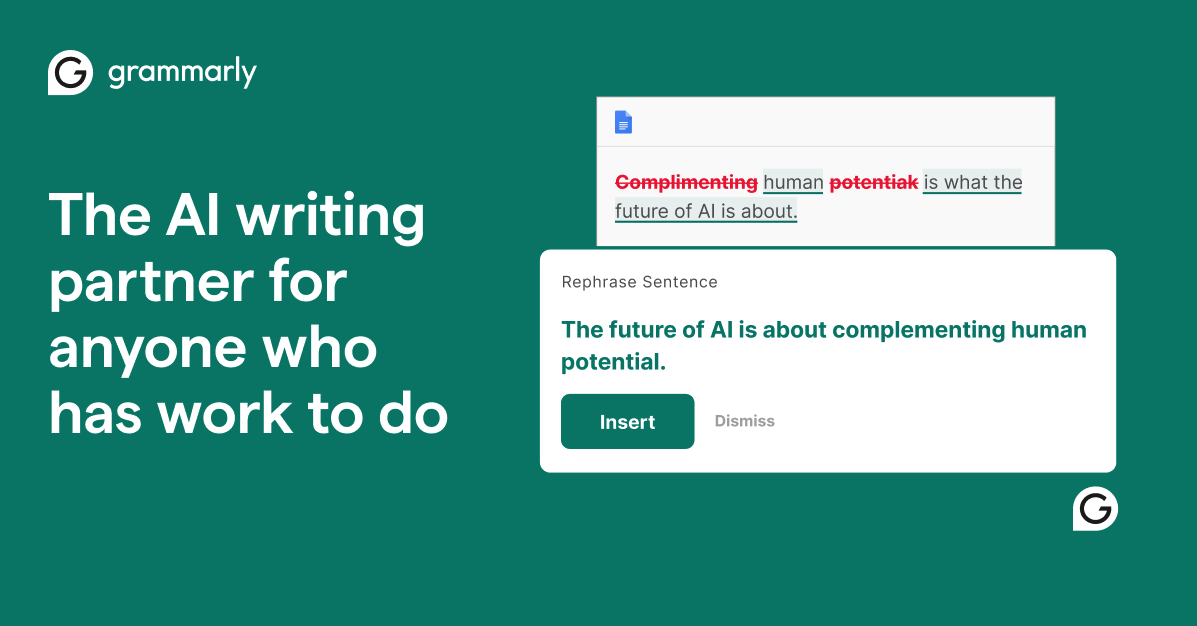
Grammarly
AI-powered writing assistant for grammar, clarity, and tone
- Real-time grammar, spelling, and punctuation correction
- Tone detection and adjustment
- Full-sentence rewrite suggestions

Perplexity
AI-powered search engine that answers questions with cited sources
- Real-time web search with inline source citations
- Pro Search multi-step deep research automation
- Multiple model options (Sonar, GPT-4o, Claude)
Frequently Asked Questions
Does using AI to help write essays constitute academic dishonesty?
How do I make sure my essay doesn't sound AI-generated?
How accurate is AI for academic research and source recommendations?
Agent Skills for This Workflow
Get More Scenarios Like This
New AI guides, top MCP servers, and the best tools — curated weekly.