Write a Book with AI
Use AI as a writing partner to take a book from concept to complete manuscript. This isn't about having AI write your book for you — it's about using AI to handle structural planning, chapter scaffolding, writer's block, and editing so your ideas and voice come through clearly and efficiently.
Tools You'll Need
MCP Servers for This Scenario
Browse all MCP servers →- 1
Develop Your Book Concept and Architecture
Before writing a word of content, validate your concept, define your reader, and build the complete structural blueprint that will guide months of writing.
I want to write a book. Help me develop and validate the concept before I commit to the project.

**My book idea**: [describe your idea in 2-4 sentences — don't overthink it, rough is fine]
**Genre/type**: [e.g., 'narrative nonfiction,' 'self-help,' 'literary fiction,' 'business book,' 'memoir']
**My background relevant to this book**: [e.g., 'I'm a therapist who's worked with 500+ patients on anxiety' or 'I grew up in this world and lived this story']
**Intended reader**: [who this book is for]

Help me with:

1. **Concept Sharpening**: Is this one book or two? Is the scope manageable for a first-time author? What's the core premise — the one idea the whole book argues or explores? Write it in one sentence.

2. **Market Context**: What books already exist in this space? Name 5 comparable titles. Where does mine fit — is it competing head-on, or carving a distinct niche? What's the gap I'm filling?

3. **Reader Promise**: What is the reader implicitly promised when they pick up this book? For nonfiction: what will they be able to do or understand differently by the end? For fiction: what experience, feeling, or question will the book give them?

4. **Structural Options**: Give me 3 different possible structural approaches for this book (e.g., chronological, thematic, case-study-driven, argument-and-evidence, story-with-lessons). For each, explain the trade-offs: what it does well, what it risks, and which type of reader it serves best.

5. **Killer Opening**: What is the most compelling possible opening for this book — the first scene, the first data point, the first question? What would make someone on the first page unable to put it down?
Tip: The structural decision in point 4 determines everything: your outline, your chapter count, your writing process, and ultimately how readable the book is. Don't default to chronological structure because it's comfortable. The structure should serve the reader's experience, not your convenience as the writer.
- 2
Build the Full Chapter Outline
Create a chapter-by-chapter blueprint detailed enough that you could hand it to a co-author and they'd know what to write. This is the document you'll write from for months.
Build a complete chapter-by-chapter outline for my book.

**Book premise**: [one sentence from Step 1]
**Book type**: [genre/category]
**Target length**: [e.g., '70,000 words' or '250 pages']
**Chosen structure**: [from Step 1]

Create the full outline:

1. **Opening and Closing Bookends**: Design the first and last chapter/section before anything in between. The opening sets the promise; the closing must fulfill it. What specifically happens in each?

2. **Chapter-by-Chapter Breakdown**: For each chapter:
   - Chapter number and title
   - The chapter's one job: what single thing does this chapter do for the reader?
   - Core content: the key points, scenes, arguments, or stories it contains
   - Opening: how does this chapter start (a scene, a question, a data point, a statement)?
   - Closing: how does this chapter end — and what makes the reader want to read the next one?
   - Estimated word count
   - How it connects to the previous chapter and sets up the next

3. **Arc and Momentum**: Map the emotional/intellectual arc of the whole book. Where is the midpoint? Where is the lowest point (maximum tension or complexity)? Where does the resolution or transformation occur? These structural beats need to be intentional, not accidental.

4. **Chapter Sequencing Logic**: Explain why the chapters are in this order. What would break if Chapter 5 swapped with Chapter 8?

5. **What I Haven't Figured Out Yet**: Flag 3-5 chapters where the content is still unclear. What research, interviews, or thinking do I need to do before I can write those chapters?
Tip: A detailed outline is not a cage — it's a map. You'll deviate from it while writing, and that's fine. But without it, you'll hit Chapter 6 with no idea what comes next and give up. Most abandoned books die not from lack of talent but from lack of structure. Write the outline to the point of slight boredom, then start writing.
- 3
Write Chapters Using AI as a Drafting Partner
Use a chapter-by-chapter prompting workflow to generate strong first drafts while maintaining your voice and ideas throughout.
Help me write Chapter [number]: [chapter title] of my book.

**This chapter's job**: [one sentence from your outline]
**Core content to cover**: [bullet points from your outline]
**Chapter opening**: [your planned opening from the outline]
**Word count target**: [e.g., 3,500 words]

**My voice and style** (IMPORTANT — read carefully):
- Overall tone: [e.g., 'warm, direct, and occasionally funny — like a smart friend who happens to be an expert, not a professor']
- Sentence structure: [e.g., 'I prefer shorter sentences for impact and vary length deliberately. I rarely use semicolons. I use em-dashes frequently.']
- Things I want to avoid: [e.g., 'academic hedging, passive voice, rhetorical questions as section openers, the word 'leverage' as a verb']
- Sample of my existing writing: [paste 2-3 paragraphs you've written to train the AI on your voice]

**What I want you to do**:
Do NOT write the full chapter in one shot. Instead:
1. First, write a detailed section-by-section breakdown of how you'd structure this chapter (I'll approve or modify)
2. Then write the opening 3 paragraphs and wait for my feedback on voice
3. Once I approve the voice, proceed section by section, pausing after each for my review

**Content notes for this chapter**: [any specific arguments, stories, data points, or examples you want included]
Tip: The 'pause and approve' approach in the prompt is non-negotiable for maintaining your voice across a full book. AI that writes freely for 3,500 words will drift. When you pause every 500-700 words and correct course, the cumulative drift is minimal and the final chapter sounds like you wrote it.
- 4
Overcome Writer's Block and Stuck Sections
Use AI strategically when you're stuck — not to write for you, but to unlock your own thinking and get you moving again.
I'm stuck on [describe the specific problem — e.g., 'Chapter 7 of my book. I know what needs to happen but I don't know how to open it. Every opening I try feels flat or forced.'].

Here's my context:
- Book type and tone: [brief description]
- What Chapter 7 needs to accomplish: [the chapter's job]
- What I've already tried that didn't work: [describe your failed attempts]
- What I think the problem is: [your diagnosis]

Don't write the chapter for me. Instead, help me get unstuck by:

1. **Reframe the Problem**: What am I actually struggling with? (Sometimes what looks like an opening problem is really a structural problem, or a problem with the chapter's purpose.)

2. **Generate Unstick Options**: Give me 10 wildly different ways to open this chapter. Don't worry about whether they're 'right' — generate variety. I'll use these as springboards, not finished copy.

3. **Constraint Challenge**: Give me one unusual constraint to write under for the next 20 minutes. (e.g., 'Write the opening as if you're explaining it to a 12-year-old,' or 'Write it as a scene with dialogue, even if your book normally doesn't use scenes.') Constraints break the judgment loop that causes writer's block.

4. **Find the Fear**: Sometimes writer's block is avoidance. Is there something uncomfortable about this chapter — an argument I'm not confident in, a story that feels too vulnerable, a claim I don't know how to support? Ask me 3 probing questions that might surface what I'm unconsciously avoiding.

5. **Minimum Viable Draft**: Tell me: what's the absolute minimum this chapter needs to contain to do its job? Strip away everything else. If I just wrote that, would the chapter still work?
Tip: Writer's block is almost always a judgment problem, not an inspiration problem. The inner critic is evaluating in real time, which makes it impossible to generate. The fix is to separate generation from evaluation completely: write ugly for 25 minutes without reading what you've written, then evaluate. This works every time.
- 5
Edit and Revise Your Manuscript
Use AI as a developmental editor, line editor, and proofreader — in that order — to transform your complete draft into a publishable manuscript.
Help me edit Chapter [number] of my manuscript. I need [type of edit: developmental / line / copy].

**Here is the chapter**: [paste the full chapter]

**Developmental Edit** (big picture — do this first):
1. Does this chapter do its one job? [State the job] — is it achieved?
2. Where does the chapter lose momentum or clarity? Flag specific sections.
3. Is anything in this chapter redundant with other chapters? (I'll need to identify this across the whole manuscript.)
4. Where is the logic unclear or the argument unconvincing?
5. Where is there too much and where is there too little? What should be cut and what should be expanded?

**Line Edit** (sentence level — do this after the structure is right):
1. Flag every sentence that is passive, vague, or over-qualified.
2. Flag every paragraph that is longer than 6 sentences — suggest where to break it.
3. Identify 5-10 word-level substitutions where a more precise or vivid word would improve the sentence.
4. Find transitions that feel abrupt or forced.
5. Highlight the 3 best sentences in the chapter — the ones I should protect at all costs.

**Copy Edit** (errors only — do this last):
1. Grammar and punctuation errors
2. Inconsistent formatting
3. Repeated words within 3 sentences of each other
4. Any factual claims I should flag for verification

Provide your feedback in organized sections, not as tracked changes — I'll make the revisions myself.
Tip: Edit in this exact order: developmental, then line, then copy. Editing at the line level before the structure is right wastes time — you'll polish sentences that you later cut. Many writers do this backwards, spending hours on copy editing before the chapter is structurally sound. Developmental first, always.
Recommended Tools for This Scenario

Claude
Anthropic's AI assistant built for thoughtful analysis and safe, nuanced conversations
- 200K token context window for massive document processing
- Artifacts — interactive side-panel for code, docs, and visualizations
- Projects with persistent context and custom instructions

ChatGPT
The AI assistant that started the generative AI revolution
- GPT-4o multimodal model with text, vision, and audio
- DALL-E 3 image generation
- Code Interpreter for data analysis and visualization
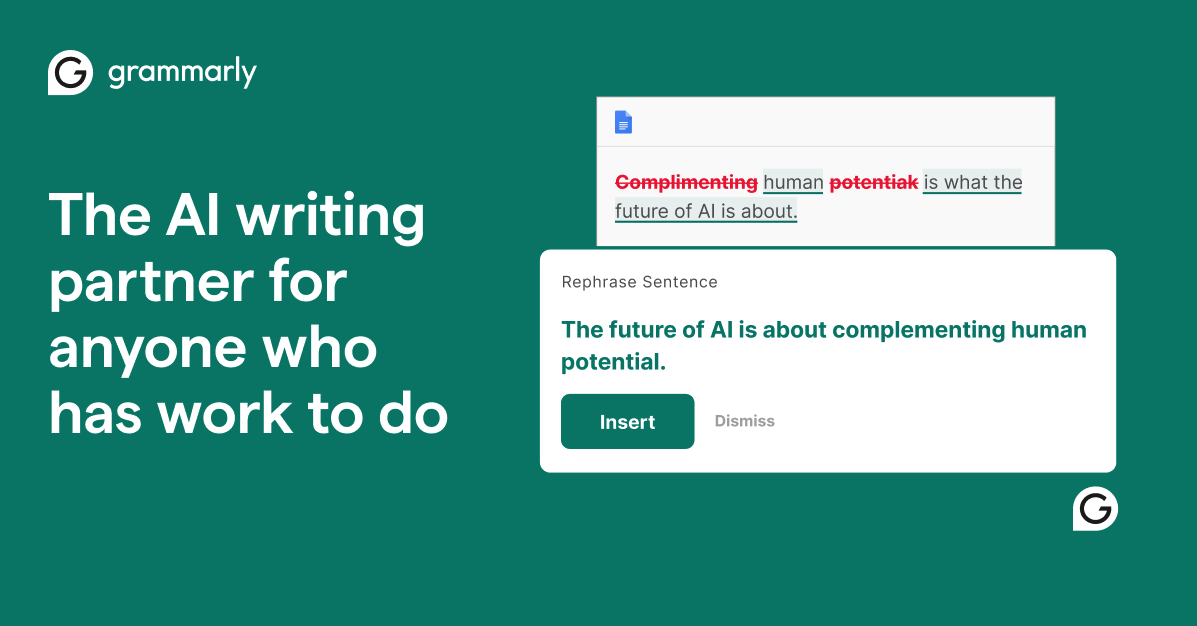
Grammarly
AI-powered writing assistant for grammar, clarity, and tone
- Real-time grammar, spelling, and punctuation correction
- Tone detection and adjustment
- Full-sentence rewrite suggestions
Frequently Asked Questions
Will a publisher or agent care that I used AI to help write my book?
How do I maintain my voice when using AI for long-form writing?
How long does it realistically take to write a book with AI assistance?
Agent Skills for This Workflow
Get More Scenarios Like This
New AI guides, top MCP servers, and the best tools — curated weekly.