Write Job Descriptions with AI
Most job descriptions repel great candidates. They list 17 requirements, use corporate buzzwords, bury what the job actually involves, and give no reason for someone good to apply over the five similar roles already open at competing companies. This workflow helps you write a job description that attracts qualified candidates, sets honest expectations, and makes your company sound like a place worth joining.
Tools You'll Need
MCP Servers for This Scenario
Browse all MCP servers →- 1
Define the Role Before You Write
Most bad job descriptions start with a bad brief. Clarify exactly what this role needs to accomplish before writing a single line.
I need to write a job description for a new role. Before I start writing, help me clarify what this role actually needs to be.

Role information:
- Job title: [e.g., 'Marketing Manager']
- Team: [which team or department]
- Reports to: [title of hiring manager]
- Company: [company name and brief description, e.g., '80-person Series B fintech startup']
- Why we're hiring this role: [e.g., 'scaling up our content output' / 'replacing someone who left' / 'new function we haven't had before']
- What this person will own in their first 6 months: [be specific — what projects, what deliverables?]
- What does success look like after 1 year in this role? [specific outcomes, not traits]

Now help me:

1. **Must-have vs. nice-to-have requirements**: I'll give you a brain dump of everything I want. You separate them: what's truly non-negotiable for someone to be effective on day one, vs. what can be learned on the job or is a bonus?
My requirements brain dump: [list everything you're thinking — experience, skills, tools, soft skills, personality traits, education, industry background]

2. **Realistic requirement audit**: Flag any requirements that are commonly over-specified (e.g., '5+ years experience' for a role a 2-year person could do, or 'must have X industry background' when the skills transfer from adjacent industries). Over-specified requirements exclude strong candidates unnecessarily.

3. **The actual job in one sentence**: Write a single sentence that captures what this person does and why it matters. If you can't write it in one sentence, the role might not be well-defined.

4. **Red flags to address**: What aspects of this role or company might make strong candidates hesitate? We should acknowledge these honestly in the JD rather than letting candidates discover them after joining.
Tip: The number-one hiring mistake is writing a job description for the ideal person rather than the job you actually have. Write the job first, then figure out who could do it — not the reverse. A JD that starts with 'we want someone who...' and lists a personality profile before a job description will attract people who look good on paper but don't know what they're signing up for.
- 2
Write the Job Description Draft
Generate a complete JD draft with a compelling hook, honest role description, and requirements that are specific enough to be useful without being exclusionary.
Write a complete job description for this role.

Role: [job title]
Company: [company name] — [one line company description, e.g., 'We build financial planning tools for independent contractors, 1.2M users, Series B']
Location: [city / remote / hybrid with details]
Compensation: [salary range — include this if you can, it dramatically improves qualified applicant volume]
Team size and structure: [e.g., 'Joining a 4-person marketing team, reporting to the VP of Marketing']

The job in one sentence: [from Step 1]
Must-have requirements: [list from Step 1]
Nice-to-have requirements: [list from Step 1]
First 6-month priorities: [from Step 1]
1-year success definition: [from Step 1]

Write the JD with these sections:

1. **Opening hook** (2-3 sentences): Not 'we are a dynamic company seeking a motivated professional.' Open with the specific problem this role solves or the specific opportunity it creates. Make a strong candidate think 'that's interesting.'

2. **About the role** (100-150 words): What this person will actually do, day-to-day and strategically. Be honest about the unglamorous parts too.

3. **What you'll work on** (4-6 bullets): Specific projects and responsibilities. Action verb + specific scope + why it matters. Not 'manage social media' but 'own our LinkedIn and Twitter presence — we've grown LinkedIn followers 3x in the last year and want to replicate that on Twitter.'

4. **What we're looking for** (split into Must-Have and Nice-to-Have): Keep must-haves to 5-6 max. Label the nice-to-haves clearly so strong candidates who don't have all of them still apply.

5. **About us** (75-100 words): Company context that tells a compelling story, not a Wikipedia entry. What's the mission? What's the traction? Why is this a good time to join?

6. **What we offer**: Compensation, benefits, culture perks. Be specific. '401k matching up to 4%' is better than 'competitive benefits.'

Tone: [e.g., direct and informal / professional and structured / mission-driven and warm]
Tip: Including a salary range increases qualified applicant volume by 30-50% on average and reduces time wasted on candidates who are immediately out of range. Candidates who apply without knowing the salary will ask in the first screen call anyway. Post the range.
- 3
Optimize for Diversity and Inclusion
Subtle language choices in job descriptions systematically exclude qualified candidates. Run a D&I audit to broaden your candidate pool without lowering standards.
Review this job description for language that might unintentionally exclude qualified candidates. [Paste your JD draft] Analyze and improve: 1. **Gender-coded language**: Research shows certain words skew applications. Flag words that code as masculine (e.g., 'dominate,' 'aggressive,' 'competitive,' 'rockstar,' 'ninja,' 'he will') or that are unnecessarily gendered. Suggest neutral alternatives for each. 2. **Age bias**: Flag language that might discourage older candidates ('digital native,' 'recent graduate preferred') or younger candidates ('seasoned professional with 10+ years'). Suggest how to describe experience requirements in terms of capabilities rather than years. 3. **Over-specified credentials**: Are there degree requirements or years-of-experience minimums that are higher than the job actually needs? Research shows that men apply when they meet 60% of requirements; women apply when they meet nearly 100%. Are the requirements bars realistic or unnecessarily high? 4. **Cultural fit language**: Phrases like 'culture fit' or 'we work hard and play hard' or 'family environment' can signal exclusion. Suggest more specific, inclusive alternatives that describe the actual working style. 5. **Accessibility**: Does the JD make clear what the physical or logistical requirements actually are (vs. defaulting to requirements that aren't necessary for the role)? 6. **Add an inclusion statement**: Write a brief, genuine inclusion statement that reflects the company's commitment (2-3 sentences — specific enough to be meaningful, not generic enough to be meaningless). Avoid boilerplate 'we are an equal opportunity employer' language.Tip: The goal of a D&I audit on a JD isn't to lower standards — it's to remove invisible barriers that have nothing to do with the ability to do the job. A requirement for a degree when the skills can be demonstrated by a portfolio excludes qualified people for no good reason. Every unnecessary requirement you remove broadens the pool without reducing quality.
Recommended Tools for This Scenario

ChatGPT
The AI assistant that started the generative AI revolution
- GPT-4o multimodal model with text, vision, and audio
- DALL-E 3 image generation
- Code Interpreter for data analysis and visualization

Claude
Anthropic's AI assistant built for thoughtful analysis and safe, nuanced conversations
- 200K token context window for massive document processing
- Artifacts — interactive side-panel for code, docs, and visualizations
- Projects with persistent context and custom instructions
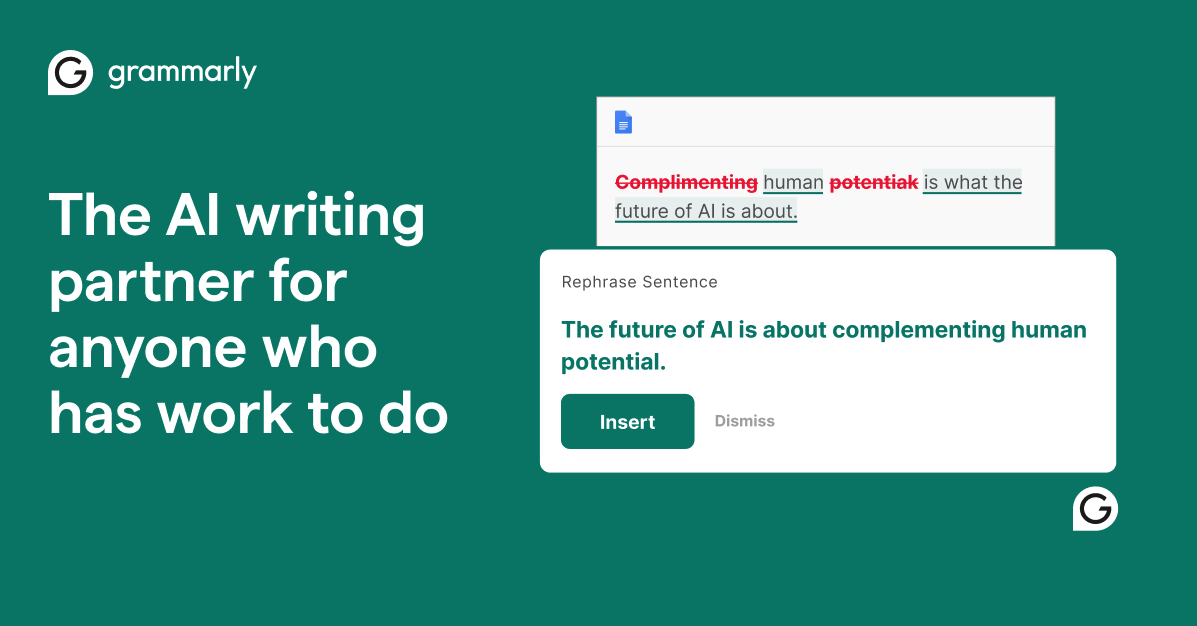
Grammarly
AI-powered writing assistant for grammar, clarity, and tone
- Real-time grammar, spelling, and punctuation correction
- Tone detection and adjustment
- Full-sentence rewrite suggestions
Frequently Asked Questions
How long should a job description be?
Should I post a salary range?
What's the most common mistake in job descriptions?
Agent Skills for This Workflow
Get More Scenarios Like This
New AI guides, top MCP servers, and the best tools — curated weekly.