Write a Newsletter with AI
Produce a polished, engaging newsletter issue in under an hour. AI handles research, structure, and first drafts while you focus on your unique perspective and the insights only you can provide. Works for personal newsletters, company updates, and industry roundups.
Tools You'll Need
MCP Servers for This Scenario
Browse all MCP servers →- 1
Plan the Issue
Decide what this issue is about, what angle to take, and what the reader will walk away with. A focused newsletter beats a sprawling one every time.
I write a newsletter called [newsletter name] for [audience description, e.g., 'early-stage founders in the consumer tech space' or 'HR managers at mid-size companies'].

I'm working on an issue about [topic/theme, e.g., 'how AI is changing performance reviews' or 'three things I learned from a failed product launch']. My list has [approximate subscriber count] subscribers. Send frequency: [weekly/biweekly/monthly].

Help me plan this issue:

1. **Core Angle**: I have a vague idea but need help sharpening it. The raw material I'm working with: [describe what you know, what happened, what you want to say]. Help me find the most compelling, non-obvious angle. What's the counterintuitive take? What are 3 different framings of this topic, and which would resonate most with my audience?

2. **Newsletter Structure**: Recommend a structure for this issue. Consider: lead essay vs. roundup vs. personal story + lessons vs. Q&A format. Which format best serves this particular topic and my audience's reading habits?

3. **Subject Line Options**: Write 8 subject line options. Mix approaches: curiosity gap, specific number/result, bold claim, personal story signal, and urgency. For each, rate how well it matches my audience's psychology.

4. **What NOT to Include**: What would make this issue feel unfocused or too long? What should I cut before I start writing?

5. **The One Thing**: If the reader only takes away one idea or action from this issue, what should it be? Force me to choose — this becomes the anchor of the entire issue.
Tip: Write the subject line before you write the newsletter, not after. The subject line is your commitment to the reader: this is what you'll get. Writing it first keeps you from drifting. If you can't write a compelling subject line for your topic, the topic isn't focused enough yet.
- 2
Write the Lead Section
Draft the opening — the hardest part of any newsletter. The first 3-5 sentences determine whether the reader continues or hits delete.
Write the opening section for my newsletter issue on [topic/angle].

**Newsletter name and vibe**: [e.g., 'The Lever — analytical, direct, no fluff, written by a former operator for operators']
**My audience**: [description]
**The angle I'm taking**: [your chosen angle from Step 1]
**The one thing readers should walk away with**: [from Step 1]

Write 3 different opening options:

**Option A — Story Opening**: Start with a specific moment, scene, or event that illustrates the topic. Not 'many people struggle with X' — pick a real or hypothetical moment with a specific person, place, and detail. 100-150 words.

**Option B — Bold Claim Opening**: Lead with the most provocative, defensible version of your main argument. Follow it immediately with the 'here's why I believe this' setup. 80-120 words.

**Option C — Data or Observation Opening**: Start with a specific data point, trend, or observation that creates a cognitive gap — something the reader didn't expect and now wants explained. 80-120 words.

For each option, include:
- The opening itself
- A transition sentence that moves into the body of the newsletter
- A note on which type of reader it resonates with most

After the options, recommend which one fits my newsletter's style and why.

My voice reference (IMPORTANT): [paste 2-3 sentences from a previous newsletter issue you've written]
Tip: Never open with 'In this issue, I'll be covering...' or 'Welcome back to...' These are throat-clearing, not writing. The reader already knows they opened your newsletter. Start with the thing that made you want to write this issue in the first place — that's where the energy is.
- 3
Write the Body and Main Sections
Draft the core content of the newsletter — the substance that justifies the subject line's promise.
Continue writing the body of my newsletter issue. I've chosen this opening: [paste your chosen opening from Step 2].

**Newsletter structure for this issue**: [from Step 1, e.g., 'lead essay with 3 key points' or 'personal story + 5 lessons + resource roundup']
**Target total length**: [e.g., '600-800 words' — most high-performing newsletters are 400-1,000 words]

Write the main body sections:

**Section requirements**:
- Each section should have a clear point it makes — if I can't summarize a section in one sentence, it's unfocused
- Use subheadings only if the newsletter is 700+ words — for shorter issues, let the paragraphs breathe
- Every abstract claim should be followed by a specific example, data point, or mini-story
- Paragraphs: 2-4 sentences max. Newsletter readers scan first, read second. Dense paragraphs kill open rates.
- Avoid: 'In today's world,' 'It goes without saying,' 'At the end of the day,' 'game-changer'
- Include at least one insight that can only come from my experience: something I've personally seen, done, or learned that no AI or generic article could produce. [Describe that insight or experience here]

For each section, write:
- The section itself
- One optional 'pull quote' — a single sentence worth highlighting in the email design

Section topics to cover: [list 3-5 points from your plan]
Tip: The line that makes someone forward a newsletter is almost always a specific, original insight they haven't seen before. Generic observations get read and forgotten. The forwarding moment comes from something concrete: a number, a counterintuitive finding, or a specific story with a specific lesson. Make sure this issue has at least one of those.
- 4
Write the Closing and Call to Action
Close the newsletter with a memorable ending and a clear, single call to action — the two elements most newsletters handle badly.
Write the closing section and call to action for my newsletter issue.

**Main point of the issue**: [one sentence]
**What I want readers to do after reading**: [one specific action — e.g., 'reply and tell me their experience,' 'click through to the full article,' 'share with a colleague,' 'try this one thing this week']

1. **Closing Paragraph (60-80 words)**: End the newsletter with a sentence or two that lands the main point — not a summary, but a resonant closing thought. The last sentence should feel like a conclusion, not a trailing off. Give me 3 options.

2. **Call to Action**: Write a clear CTA that:
   - Asks for one thing only (multiple CTAs kill click-through)
   - Explains why the reader should do it (not just 'click here')
   - Is direct without being pushy
   Give me 2 CTA versions: one for high engagement (reply/share) and one for conversion (click to read/buy/sign up).

3. **P.S. Line**: Write 2 P.S. options. The P.S. is the second-most-read section of any email (after the subject line). Use it for: a bonus insight, a softer secondary CTA, a preview of next issue, or a personal note.

4. **Final Polish Pass**: Review the full newsletter for:
   - Subject line match: does the email deliver on the subject line's promise?
   - Length check: is anything here that could be cut without losing value?
   - Tone consistency: does it sound like one person wrote it, start to finish?
   - The 'so what': would a reader know exactly what to take away and do?
Tip: The P.S. is read by people who skipped the body entirely. Write a P.S. that works as a standalone: someone reading only the subject line and the P.S. should understand what the issue was about and what you want them to do. It's not a bonus — it's your second chance at the reader.
Recommended Tools for This Scenario

ChatGPT
The AI assistant that started the generative AI revolution
- GPT-4o multimodal model with text, vision, and audio
- DALL-E 3 image generation
- Code Interpreter for data analysis and visualization

Claude
Anthropic's AI assistant built for thoughtful analysis and safe, nuanced conversations
- 200K token context window for massive document processing
- Artifacts — interactive side-panel for code, docs, and visualizations
- Projects with persistent context and custom instructions
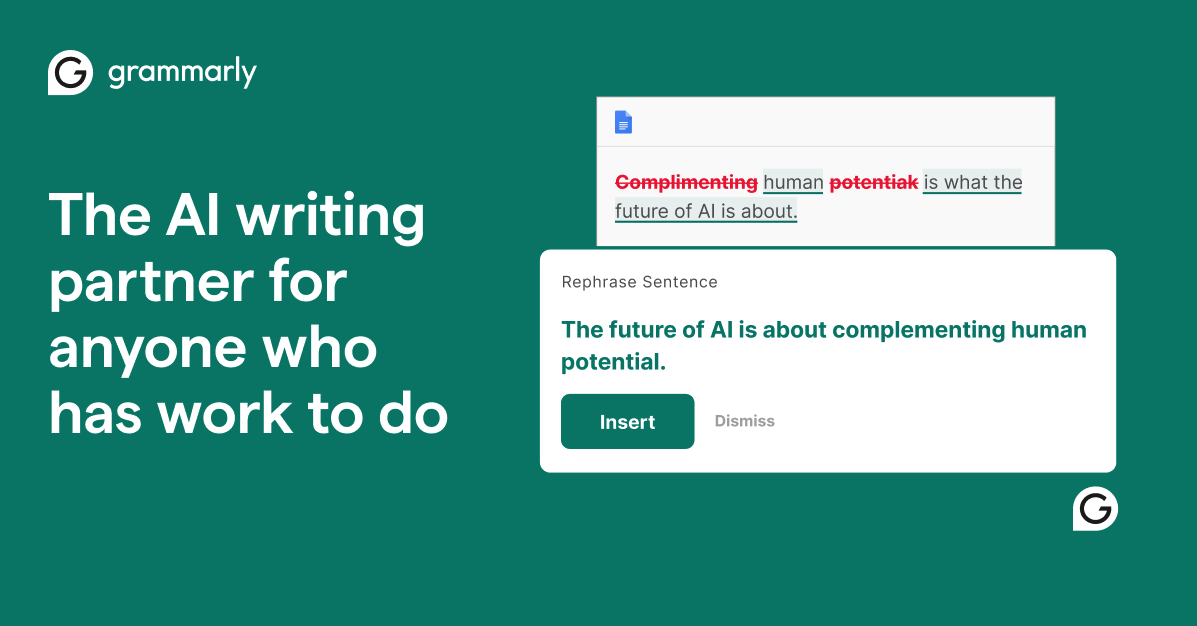
Grammarly
AI-powered writing assistant for grammar, clarity, and tone
- Real-time grammar, spelling, and punctuation correction
- Tone detection and adjustment
- Full-sentence rewrite suggestions
Frequently Asked Questions
How long should a newsletter be?
How often should I send my newsletter?
How do I grow my newsletter subscriber list?
Agent Skills for This Workflow
Get More Scenarios Like This
New AI guides, top MCP servers, and the best tools — curated weekly.