Write a Speech with AI
Write a speech that lands — whether it's a keynote, a toast, a commencement address, or a presentation. AI helps you build structure, find the right opening, and refine the language so your message is clear and your delivery is confident.
Tools You'll Need
MCP Servers for This Scenario
Browse all MCP servers →- 1
Define the Speech Brief
Establish the context, purpose, and core message before drafting. A clear brief is the difference between a generic speech and one that fits the occasion and audience precisely.
I need to write a speech. Help me define the brief before I start writing.

**Type of speech**: [e.g., 'wedding toast,' 'product launch keynote,' 'company all-hands town hall,' 'conference keynote,' 'commencement address,' 'award acceptance,' 'retirement tribute']
**Occasion**: [description of the event]
**Audience**: [who will be in the room — relationship to speaker, age range, mood/expectations]
**My role**: [my relationship to the audience/event, e.g., 'best man,' 'CEO,' 'keynote speaker,' 'award recipient']
**Duration**: [target length — e.g., '5 minutes' or '20 minutes']
**Core message**: [the one thing I want people to remember — if I don't know yet, say that and I'll help identify it]

Help me with:

1. **Core Message**: If I've given you a topic but not a clear message, help me find the one central idea. A speech about 'leadership' is too broad. 'Great leaders make decisions they'll never be thanked for' is a message. Push me to distill my central idea to one sentence.

2. **Emotional Goal**: What do I want the audience to FEEL when they leave? Inspired? Grateful? Motivated to act? Seen and celebrated? This shapes everything — structure, tone, story choices.

3. **Tone and Register**: Given the occasion and audience, what tone is right? Formal or conversational? Serious or humor-forward? Describe the specific tonal target in 3-5 adjectives.

4. **Speech Architecture Options**: Give me 3 structural approaches for this speech type. For each, describe the shape: how it opens, what the middle does, and how it lands. Recommend which fits my situation best and why.

5. **What to Avoid**: For this type of speech, what are the 3 most common mistakes? What does an audience dread hearing in a [speech type]?
Tip: The emotional goal is more important than the content plan. Before you write a single word, ask: how do I want the last person out of that room to feel? Work backwards from that feeling. Every structural and content decision should serve the emotional goal.
- 2
Write the Opening
Craft the first 60-90 seconds of the speech — the moment the audience decides whether to tune in or check their phones.
Write the opening for my [speech type] speech.

**Core message**: [from Step 1]
**Emotional goal**: [from Step 1]
**Tone**: [from Step 1]
**Duration of full speech**: [e.g., 10 minutes]
**Key context**: [audience, occasion, my relationship to them]

Write 4 different opening options:

**Option A — Personal Story Opening**: A specific, vivid moment from my life or from the life of the person/thing being celebrated. The story should connect directly to the core message. 90-120 words. End with a sentence that transitions into the speech's main theme.

**Option B — Bold Statement Opening**: Open with a surprising claim, counterintuitive fact, or declarative statement that makes the audience sit up. Then immediately earn it. 60-80 words.

**Option C — Question or Scenario Opening**: Open with a rhetorical question or a scenario that puts the audience in a specific emotional or intellectual place. 70-100 words. Not a generic question — it should be specific and surprising.

**Option D — Humor Opening** (if appropriate for tone): An observation, self-deprecating moment, or setup-and-punchline relevant to the occasion and audience. 60-90 words. Should be warm, not edgy.

For each option, note:
- Who in the audience it works best for
- The risk if it doesn't land
- A transition line into the body of the speech

Key content/stories I want to work with: [describe any specific stories, memories, or facts you want to include]
Tip: Never open with 'I'm honored to be here today' or 'When [person] asked me to speak...' Both are stage fright sentences — they're what you say when you haven't started yet. Your first sentence should be the speech. If your opener needs to be cut in an edit, it was never the real opener.
- 3
Write the Body
Develop the middle of the speech with the structure, stories, and arguments that build toward your closing message.
Write the body of my [speech type] speech.

**My chosen opening**: [paste the opening from Step 2]
**Core message**: [one sentence]
**Structure I'm using**: [from Step 1]
**Target total words for the body**: [calculate based on duration — roughly 130 words per minute of speaking time]

**Content to include in the body**:
- Story or example 1: [describe briefly]
- Story or example 2: [describe briefly]
- Key argument or insight 1: [describe]
- Key argument or insight 2: [describe, if applicable]
- The person or thing I'm honoring/celebrating (if relevant): [context]

**Writing requirements**:
1. Write for the ear, not the eye. Sentences should sound natural when spoken aloud. Use contractions. Vary sentence length. Avoid complex subordinate clauses.
2. Repeat key phrases intentionally — repetition in speeches creates rhythm and emphasis. Identify one phrase from the core message that should appear 2-3 times.
3. Create moments of pause — places where the speaker should stop and let an idea land. Mark these with [PAUSE].
4. Each section of the body should connect back to the core message — not loosely, but explicitly.
5. If using humor: keep it relevant, warm, and brief. Maximum 2-3 humor moments per 10-minute speech.

**Build toward**: [describe the emotional peak you want to hit before the closing]
Tip: The best speeches have one big moment — a story, a revelation, or an emotional beat — that the audience will still remember years later. Design for that one moment. Everything else in the speech is scaffolding to set it up and land it.
- 4
Write the Closing and Refine for Delivery
Write an ending that lands the core message and lingers — then adapt the whole speech for spoken delivery.
Write the closing of my speech and prepare the full script for delivery.

**My core message**: [one sentence]
**Emotional goal for the ending**: [how the audience should feel]
**Body I've written**: [paste the body from Step 3]
**Any required closing elements**: [e.g., 'toast to the bride and groom,' 'call the audience to action,' 'announce the award winner']

1. **The Closing** (write 3 options):
   - Each option should land the core message without restating it mechanically
   - End on a final sentence that the audience will remember — the line people repeat afterwards
   - Include any required ceremonial element (toast, call to action, etc.)
   - The final sentence should be SHORT — 10-15 words maximum. Simple. Powerful.

2. **Delivery Script Formatting**: Take the full speech (opening + body + closing) and format it for delivery:
   - Break all long sentences into speaker-friendly segments with line breaks
   - Mark emphasis words in **bold**
   - Mark pauses as [PAUSE — 2 seconds] or [PAUSE — 3 seconds]
   - Mark moments to slow down as [SLOW]
   - Mark where to make eye contact with specific audience sections as [LOOK LEFT] / [LOOK CENTER]
   - Estimated running time at normal speaking pace (130 words/minute)

3. **Speaker Notes**: Add margin notes on any line that might need explanation for delivery, e.g., 'Wait for laughter here,' 'This line always gets an unexpected reaction — pause,' 'If nervous, this is a good reset point.'
Tip: Memorize the first 3 sentences and the last 3 sentences of your speech. Everything in between can be worked from notes. But if you look down at a paper for your opening or your close, you lose the two moments that matter most. The opening earns their attention; the closing is what they carry out the door.
Recommended Tools for This Scenario

ChatGPT
The AI assistant that started the generative AI revolution
- GPT-4o multimodal model with text, vision, and audio
- DALL-E 3 image generation
- Code Interpreter for data analysis and visualization

Claude
Anthropic's AI assistant built for thoughtful analysis and safe, nuanced conversations
- 200K token context window for massive document processing
- Artifacts — interactive side-panel for code, docs, and visualizations
- Projects with persistent context and custom instructions
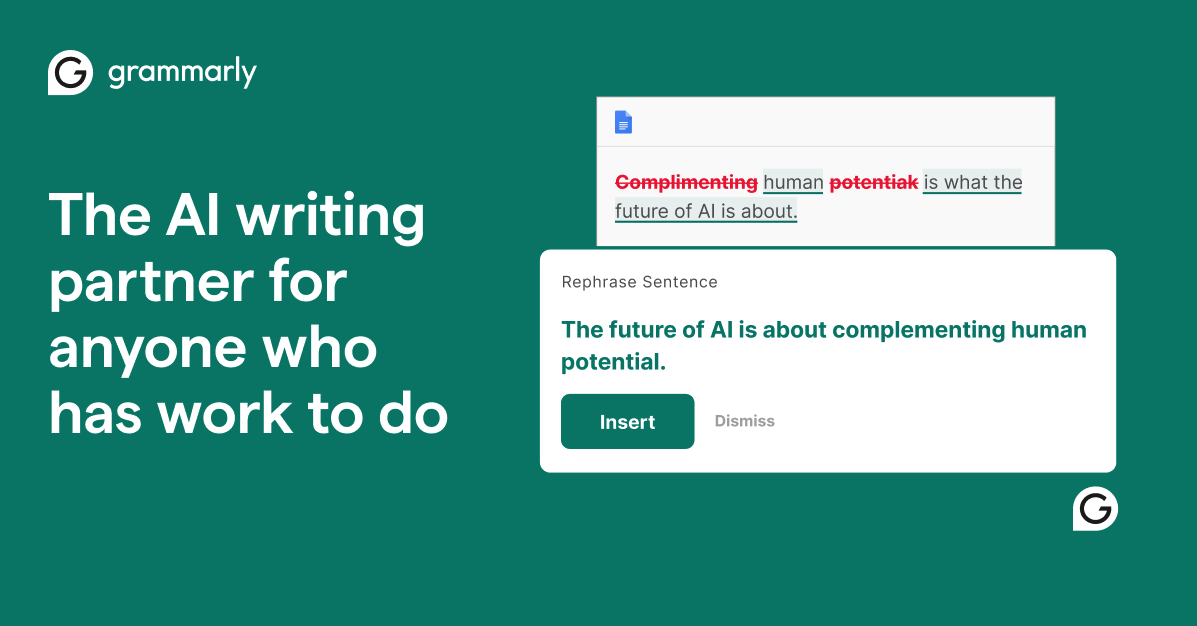
Grammarly
AI-powered writing assistant for grammar, clarity, and tone
- Real-time grammar, spelling, and punctuation correction
- Tone detection and adjustment
- Full-sentence rewrite suggestions
Frequently Asked Questions
How many words is a 5-minute speech? 10-minute speech?
Should I memorize my speech or read from notes?
How do I handle nerves before giving a speech?
Agent Skills for This Workflow
Get More Scenarios Like This
New AI guides, top MCP servers, and the best tools — curated weekly.