Write a Blog Post with AI from Outline to Publish
Go from a blank page to a polished, SEO-friendly blog post in about an hour. AI handles the heavy lifting -- topic research, outline generation, first draft, editing, and meta description -- while you focus on injecting your expertise and unique perspective. This workflow works for personal blogs, company content marketing, and guest posts alike. The goal isn't to let AI write for you; it's to eliminate the 80% of writing time spent staring at a cursor and reorganizing paragraphs, so you can spend that time on the 20% that actually matters: your original ideas.
Tools You'll Need
- 1
Research and Validate Your Topic
Before writing a single word, confirm your topic has search demand and identify what angle will make your post stand out from the 50 other articles already ranking for the same keyword.
I want to write a blog post about [your topic, e.g., 'how to start a podcast in 2026']. Before I start writing, help me validate and sharpen this topic.

1. **Search Intent Analysis**: What is someone actually looking for when they Google this? Are they looking for a step-by-step tutorial, a comparison of tools, inspiration/motivation, or something else? What stage of the buyer/reader journey are they in?

2. **Content Gap Analysis**: Based on what typically ranks for this topic, what do most articles cover? More importantly, what do they miss or get wrong? Where's the gap I can fill?

3. **Angle Suggestions**: Give me 5 distinct angles I could take on this topic. For each angle:
   - One-line hook
   - Why it's different from what already exists
   - Who specifically it would resonate with
   Example: Instead of generic 'How to Start a Podcast,' the angle could be 'How to Launch a Podcast That Gets Sponsors Before Episode 10 (A Framework for Non-Famous People)'

4. **Keyword Cluster**: List the primary keyword, 5-8 secondary keywords, and 5-8 long-tail variations I should naturally work into the post.

5. **Recommended Word Count**: Based on the competition and topic depth, how long should this post be to compete? Give me a specific range.

My target audience: [e.g., first-time podcasters who are solopreneurs or small business owners]
My expertise/unique qualification to write this: [e.g., I've launched 3 podcasts, one reached top 50 in its category]
Tip: The angle is everything. A well-angled 1,500-word post outperforms a generic 5,000-word post every time. Pick the angle that lets you share something only YOU know — that's your unfair advantage over every other article on this topic.
- 2
Generate a Detailed Outline
Build a structured outline with H2/H3 headings, key points per section, and internal logic flow. A great outline makes the actual writing almost mechanical.
Create a detailed blog post outline based on this:

- Topic: [your chosen topic]
- Angle: [your chosen angle from Step 1]
- Target word count: [e.g., 2,500 words]
- Target keyword: [primary keyword]
- Audience: [target reader]

Outline requirements:

1. **Title**: Give me 5 title options. Each should include the primary keyword, create curiosity or promise a specific outcome, and be under 60 characters for SEO. No clickbait — the post must deliver what the title promises.

2. **Introduction** (150-200 words outline):
   - Opening hook (a stat, story, or provocative statement — not a question)
   - The problem/pain point this post solves
   - What the reader will walk away with (specific promise)
   - Brief credibility statement (why should they listen to you)

3. **Body Sections** (H2 headings with H3 sub-sections):
   For each section, provide:
   - H2 heading (include a secondary keyword where natural)
   - 2-4 H3 sub-points
   - Key argument or insight for each sub-point
   - One suggested example, data point, or anecdote per section
   - Approximate word count per section

4. **Conclusion**:
   - Summary of key takeaways (not a boring recap — reframe the core insight)
   - Specific next step the reader should take TODAY
   - CTA (newsletter signup, related post, download, etc.)

5. **Internal/External Link Opportunities**: Suggest 3-5 places where I should link to other content (either internal pages on my site or authoritative external sources).

Make the outline detailed enough that someone could write the full post from it without asking clarifying questions.
Tip: Read the outline out loud. If the section flow doesn't feel like a natural conversation — if you'd lose someone explaining this at a dinner party — restructure. The best blog posts follow the logic of how you'd explain something to a smart friend, not how a textbook organizes information.
- 3
Write the First Draft Section by Section
Generate the full draft one section at a time. Writing section-by-section gives you better control over tone and depth than asking for the entire post at once.
Write Section [number] of my blog post based on this outline:

[Paste the relevant section from your outline]

Writing guidelines:
- Tone: [e.g., conversational and authoritative — like a senior colleague explaining something over coffee, not a textbook]
- Sentence structure: Vary length. Short sentences for impact. Longer ones for explanation. Never more than 3 sentences in a row of similar length.
- Paragraphs: 2-4 sentences max. White space is your friend.
- Avoid these words and phrases: 'In conclusion,' 'It's important to note that,' 'In today's world,' 'at the end of the day,' 'without further ado,' 'dive in/deep dive,' 'game-changer,' 'it goes without saying'
- Use specific examples instead of abstract claims. Don't say 'many people struggle with X' — say 'if you've spent 3 hours tweaking your intro paragraph only to delete it and start over, you know X'
- Include transition sentences that connect this section to the next
- Naturally incorporate these keywords where they fit (don't force them): [list 2-3 secondary keywords relevant to this section]
- Word count target for this section: [e.g., 400 words]

Write in first person. Include at least one concrete example, number, or mini-anecdote in this section.
Tip: Don't try to generate the whole post in one prompt. AI maintains better quality, consistency, and depth when you feed it one section at a time. Copy each finished section into a document, then reference it when prompting the next section so the AI maintains flow.
- 4
Optimize for SEO
Run your draft through SEO checks — keyword density, heading structure, meta tags, and readability. This is where the post goes from 'good article' to 'article that actually gets found.'
Review my blog post draft for SEO optimization. Here's the full text:

[Paste your complete draft]

Target primary keyword: [your keyword]
Secondary keywords: [list them]

Analyze and provide:

1. **Keyword Usage**:
   - Is the primary keyword in the title, H1, first 100 words, at least one H2, and the conclusion?
   - Approximate keyword density (aim for 1-2% for primary, 0.5-1% for secondaries)
   - Are keywords used naturally or do any placements feel forced? Flag forced ones.

2. **Heading Structure**:
   - Does the H2/H3 hierarchy make logical sense?
   - Any headings that could include a keyword more naturally?
   - Suggest any missing H2 sections that competing articles typically include

3. **Meta Data**: Write these for me:
   - SEO title (under 60 characters, includes primary keyword near the front)
   - Meta description (under 155 characters, includes primary keyword, has a clear value proposition, ends with a subtle CTA)
   - URL slug (short, keyword-rich, no stop words)

4. **Readability**:
   - Flag any paragraphs longer than 4 sentences
   - Flag any sentences longer than 30 words
   - Estimate the reading grade level (aim for grade 7-9 for most blogs)

5. **Content Additions**: Are there any topics that top-ranking articles cover that my draft is missing? List them with a brief note on what to add.
Tip: SEO optimization should feel invisible to the reader. If you can tell a post was 'optimized' while reading it, it was done badly. The best SEO writing reads like it was written for humans and just happens to include the right keywords in the right places.
- 5
Edit, Polish, and Prepare to Publish
Final editing pass for clarity, flow, grammar, and punch. This is where you turn a solid draft into something people actually want to share.
Edit my blog post for publication. Here's the full draft: [Paste your complete, SEO-optimized draft] Editing priorities: 1. **Cut the Fat**: Remove any sentence that doesn't add new information or advance the argument. Flag filler phrases, hedge words ('somewhat,' 'relatively,' 'tends to'), and redundant statements. Target: cut 10-15% of the word count without losing substance. 2. **Strengthen the Opening**: Re-read the first 3 sentences. Do they hook the reader immediately? If someone sees these in Google's search results snippet, would they click? Rewrite if needed. 3. **Improve Transitions**: Check the flow between sections. Each section should end with a bridge to the next. The reader should never feel lost or wonder 'why are we talking about this now?' 4. **Power Up Weak Verbs**: Replace passive voice with active. Replace generic verbs ('use,' 'make,' 'get,' 'have') with specific ones where possible. 5. **Fact-Check Flags**: Flag any statistics, claims, or dates that I should verify before publishing. Mark them with [VERIFY: reason]. 6. **Final Polish**: - Fix any grammar/punctuation issues - Ensure consistent formatting (lists, bold, headers) - Check that all CTAs are clear and specific - Suggest a featured image concept - Write 3 social media snippets I can use to promote this post (one for Twitter, one for LinkedIn, one for Instagram) Return the full edited post with changes tracked (use bold for additions, strikethrough for deletions) so I can review what changed.Tip: Read your final draft out loud, or use a text-to-speech tool. Your ear catches things your eye misses — awkward phrasing, repetitive sentence starters, sections that drag. If you stumble while reading aloud, your reader will stumble too.
 Hemingway Editor
 Recommended Tools for This Scenario

ChatGPT
Freemium
The AI assistant that started the generative AI revolution
- GPT-4o multimodal model with text, vision, and audio
- DALL-E 3 image generation
- Code Interpreter for data analysis and visualization

Claude
Freemium
Anthropic's AI assistant built for thoughtful analysis and safe, nuanced conversations
- 200K token context window for massive document processing
- Artifacts — interactive side-panel for code, docs, and visualizations
- Projects with persistent context and custom instructions
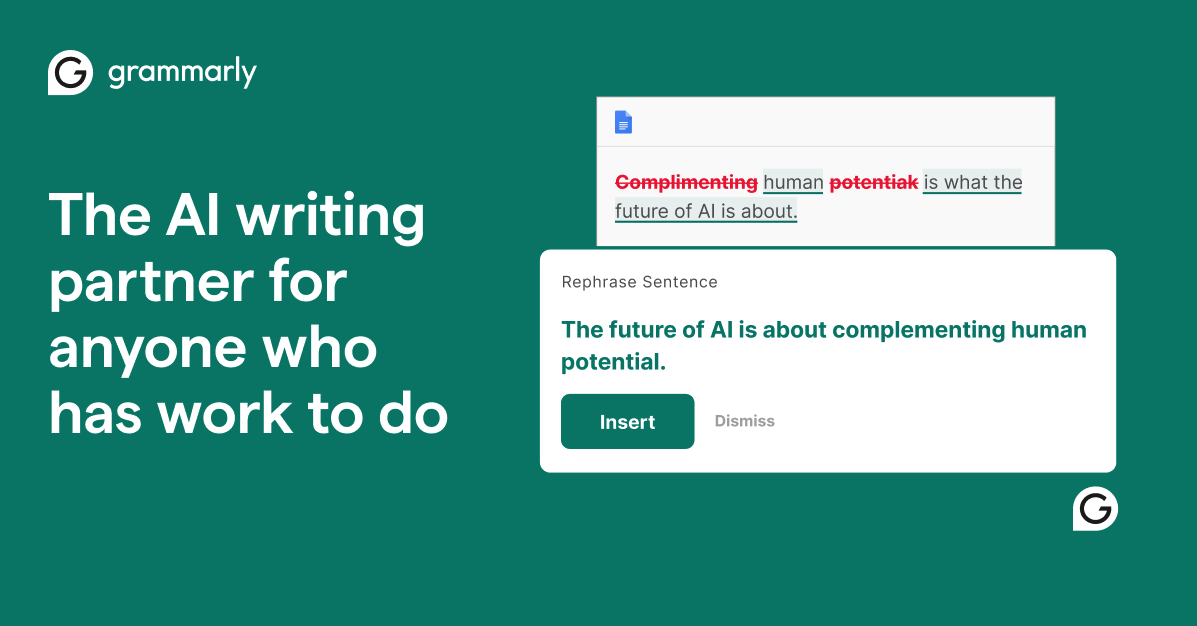
Grammarly
Freemium
AI-powered writing assistant for grammar, clarity, and tone
- Real-time grammar, spelling, and punctuation correction
- Tone detection and adjustment
- Full-sentence rewrite suggestions

Surfer SEO
Paid
AI content optimization with real-time scoring and SERP-driven recommendations
- Content Editor with real-time SEO scoring (0-100)
- Surfer AI for generating complete SEO-optimized articles
- SERP Analyzer with detailed ranking factor breakdowns