8 Best AI Platforms for Productivity Agent Skills (2026)
Disclosure: Some links earn us a commission at no extra cost to you. Rankings are independent — tools cannot pay for placement.
A curated guide to the best AI productivity platforms that support agent skills — from automated brainstorming and task planning to browser automation, workflow orchestration, and meeting summarization.
Our Top Picks

Claude Code
Paid
Anthropic's agentic CLI for autonomous terminal-native coding workflows
- Terminal-native autonomous coding agent
- Full file system and shell access for multi-step tasks
- Deep codebase understanding via repository indexing
Cursor
Freemium
AI-native code editor with deep multi-model integration and agentic coding
- AI-native Cmd+K inline editing and generation
- Composer Agent for autonomous multi-file changes
- Full codebase indexing and context awareness

Notion AI
Freemium
All-in-one workspace with AI-powered docs, wikis, and databases
- AI-powered Q&A across entire workspace
- Connected databases with relations and rollups
- Wiki with verified pages and ownership
GitHub Copilot
Freemium
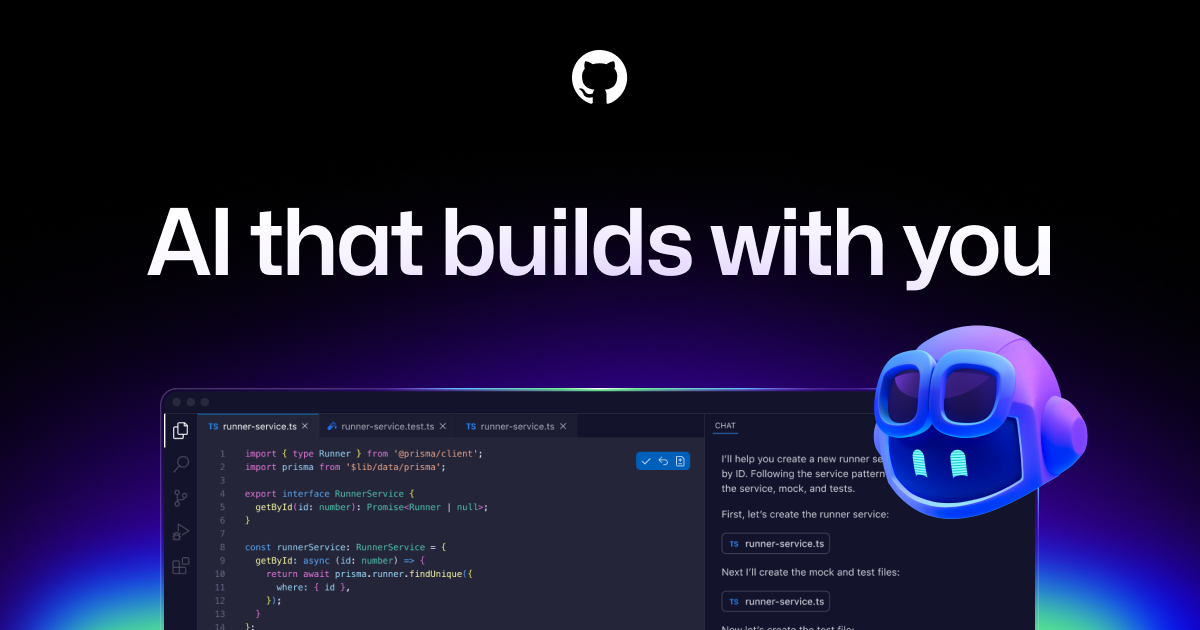
AI pair programmer that suggests code in real time across your IDE
- Real-time code completions across 30+ languages
- Copilot Chat for natural language code Q&A
- Pull request description and summary generation
Perplexity
Freemium
AI-powered search engine that answers questions with cited sources
- Real-time web search with inline source citations
- Pro Search multi-step deep research automation
- Multiple model options (Sonar, GPT-4o, Claude)

ChatGPT
Freemium
The AI assistant that started the generative AI revolution
- GPT-4o multimodal model with text, vision, and audio
- DALL-E 3 image generation
- Code Interpreter for data analysis and visualization
Windsurf
Freemium
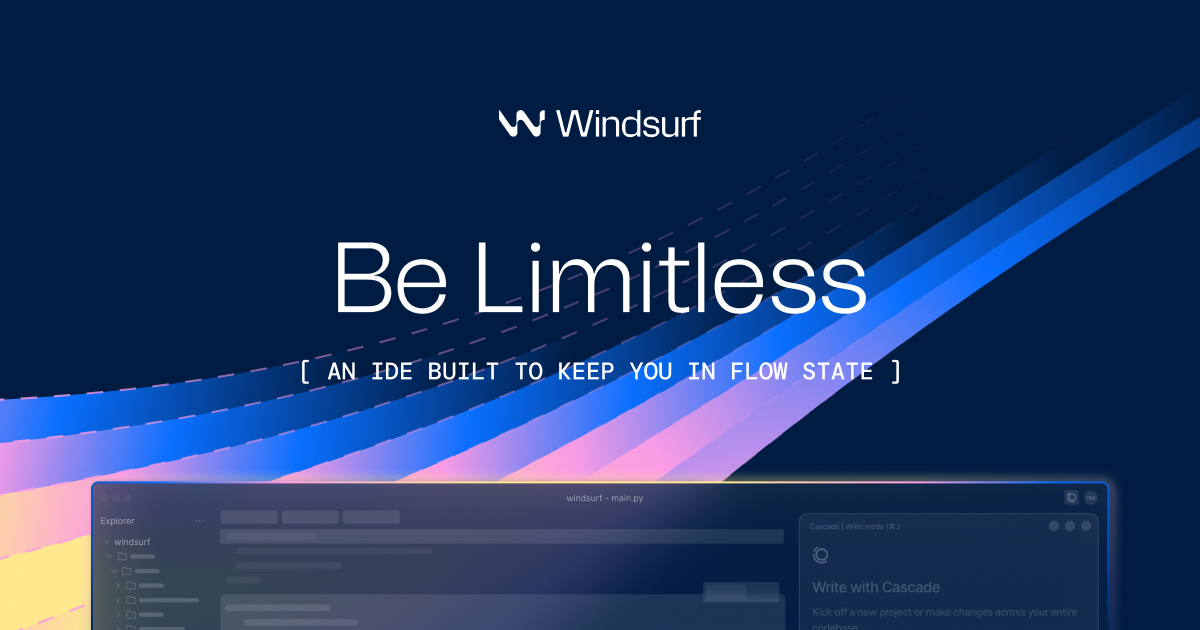
AI-native IDE with agentic Cascade for multi-step autonomous coding
- Cascade agentic coding for multi-step autonomous tasks
- Supercomplete next-action prediction
- Flows for persistent multi-turn context

Cline
Open Source
Autonomous coding agent in VS Code with human-in-the-loop approval flow
- Human-in-the-loop approval for every action
- Multi-model support (Claude, GPT, Gemini, local models)
- File creation, editing, and deletion across projects
Why Agent Skills Are Redefining Productivity
Productivity tools used to be passive containers — you put information in, you organized it, you retrieved it. The 2026 generation is fundamentally different. AI platforms now execute multi-step productivity tasks autonomously: they research a topic, synthesize findings, draft a plan, break it into tasks, and even begin executing those tasks without waiting for you to manage each step.
This transformation is powered by agent skills — discrete behaviors like Brainstorming, Task Planner, and Browser Use that platforms can invoke in sequence. The result is not just faster work but qualitatively different workflows where the AI handles routine coordination while you focus on judgment calls and creative direction.
This guide evaluates platforms by how well they operationalize productivity agent skills in real work contexts, not by feature checklists or marketing promises.
Top Productivity Agent Skills to Know
Brainstorming
The Brainstorming skill generates diverse ideas around a topic, deliberately exploring unexpected angles rather than producing a predictable list. The best implementations apply structured creativity frameworks — SCAMPER, lateral thinking, constraint removal — to push past obvious suggestions. ChatGPT and Claude Code both handle this skill well, but Claude Code adds the ability to ground brainstorming in your actual project context by reading existing files, codebases, or data.
Task Planner
The Task Planner skill breaks complex goals into actionable steps with dependencies, priorities, and time estimates. This goes beyond simple to-do list generation — it involves understanding the structure of the work, identifying blockers, and sequencing tasks for maximum efficiency. Notion AI integrates this directly into project management workflows, while Claude Code excels at technical planning where tasks involve code changes across multiple files.
Browser Use
The Browser Use skill gives AI agents the ability to navigate websites, fill forms, extract data, and interact with web applications autonomously. This is a foundational capability for productivity because it connects AI reasoning to the real world of web-based tools, dashboards, and information sources. Claude Code and Cline both support browser automation through tool integrations, enabling workflows like competitive research, form submission, and data collection without manual intervention.
SEO Audit
The SEO Audit skill analyzes websites for technical SEO issues — broken links, missing meta tags, slow page loads, crawlability problems, schema markup errors — and produces prioritized fix recommendations. This is a productivity multiplier for marketing teams because a thorough manual audit takes days; an agent-driven audit produces comparable results in minutes. Perplexity's web access capabilities complement this skill by verifying current search engine guidelines.
Workflow Automator
The Workflow Automator skill designs and implements automated sequences that connect multiple tools and services. Given a description of a repeated process — like "when a new support ticket arrives, categorize it, route it to the right team, and send an acknowledgment" — the agent produces the integration logic. Windsurf and Cursor handle the code-generation side, while platforms like ChatGPT help design the workflow logic before implementation.
Meeting Summarizer
The Meeting Summarizer skill processes meeting transcripts or notes and produces structured summaries with decisions made, action items assigned, and open questions flagged. The best implementations don't just compress text — they identify the consequential moments and separate them from discussion noise. ChatGPT and Claude Code both excel here, with Claude Code adding the ability to cross-reference meeting outcomes against existing project documentation.
Decision Matrix
The Decision Matrix skill structures complex decisions by identifying criteria, weighting them, scoring options, and surfacing tradeoffs. This is particularly valuable when a team is stuck between multiple valid approaches. The skill forces explicit articulation of what matters most, which often resolves debates faster than unstructured discussion. Notion AI and ChatGPT both implement this well in collaborative settings.
Prompt Optimizer
The Prompt Optimizer skill refines prompts for AI models to produce better, more consistent outputs. This meta-skill is increasingly important as teams build AI-powered workflows — the quality of every downstream output depends on prompt quality. Claude Code and Cursor help optimize prompts within coding contexts, while ChatGPT provides general-purpose prompt refinement with immediate testing.
Platform-by-Platform Review
1. Claude Code — Best for Technical Productivity
Claude Code operates in your terminal with full filesystem and shell access, making it uniquely suited to productivity tasks that involve files, code, and system operations. Its Task Planner skill works with actual project context — it reads your codebase, understands the current state, and produces plans grounded in reality rather than generic advice. The Browser Use integration extends this to web-based research and data gathering. Best for developers and technical teams whose productivity bottlenecks involve complex, multi-step technical work.
2. Cursor — Best for IDE-Integrated Productivity
Cursor brings productivity agent skills into the development environment where most technical work happens. Its Composer mode chains Task Planner and Workflow Automator steps within the familiar VS Code interface, letting you plan and execute without context-switching. The multi-file awareness means a single productivity session can update documentation, code, and configuration simultaneously.
3. Notion AI — Best for Team Knowledge Management
Notion AI embeds agent skills directly into the collaborative workspace where teams organize their information. Its Meeting Summarizer skill pulls from Notion pages and databases, its Task Planner creates linked database entries with proper relations, and its Decision Matrix outputs live tables that teams can continue to refine. The integration advantage is significant — outputs don't need to be copied from one tool to another.
4. GitHub Copilot — Best for Developer Workflow Productivity
Copilot's productivity value extends beyond code completion into workflow acceleration. Its Workspace feature handles Task Planner tasks across entire repositories, and its PR summary generation acts as an automated Meeting Summarizer for asynchronous development teams. The deep GitHub integration means productivity improvements compound across issues, pull requests, and code review.
5. Perplexity — Best for Research-Driven Productivity
Perplexity excels at productivity tasks that start with information gathering. Its real-time web access makes SEO Audit research, competitive analysis, and fact-checking dramatically faster. When combined with its citation system, the output is directly usable in reports and presentations without additional verification. For knowledge workers whose productivity depends on rapid, accurate research, Perplexity is the most efficient starting point.
6. ChatGPT — Best for General-Purpose Productivity
ChatGPT's breadth makes it the most versatile productivity platform. It handles Brainstorming sessions with creative range, produces structured Decision Matrix analyses, generates Meeting Summarizer outputs from pasted transcripts, and refines workflows through conversational iteration. Its plugin ecosystem and GPT Store extend these capabilities into specialized productivity domains. The tradeoff is depth — specialized platforms outperform it on any single skill.
7. Windsurf — Best for Automated Multi-Step Workflows
Windsurf's Cascade engine is purpose-built for multi-step execution, making it the strongest platform for Workflow Automator tasks that span many files and systems. When a productivity task involves coordinating changes across configuration files, scripts, documentation, and code, Windsurf handles the propagation in a single pass. Its autonomous execution mode is particularly effective for repetitive productivity tasks that need to run consistently.
8. Cline — Best for Customizable Productivity Agents
Cline's open-source architecture and model flexibility make it the best platform for teams that want to build custom productivity agents. You can connect any OpenRouter-compatible model, define custom tool integrations for Browser Use and Workflow Automator tasks, and audit exactly what the agent does at each step. This transparency is essential for enterprise teams with compliance requirements around AI-driven workflows.
How to Pick the Right Platform
- Technical work in codebases: Claude Code for context-aware planning and execution
- Team collaboration: Notion AI for integrated workspace productivity
- Research-heavy workflows: Perplexity for fast, cited information gathering
- General-purpose productivity: ChatGPT for breadth across all skill types
- Multi-file automation: Windsurf for complex, coordinated changes
- Developer workflows: GitHub Copilot for GitHub-native productivity
- Custom agent pipelines: Cline for full control over agent behavior
- IDE-first productivity: Cursor for in-editor workflow management
Combining Skills for Maximum Productivity
The highest-leverage productivity approach in 2026 chains skills into pipelines: Perplexity for research and fact-gathering, ChatGPT for Brainstorming and Decision Matrix analysis, Claude Code or Cursor for Task Planner execution, and Notion AI for capturing outcomes where the team can access them. Each platform handles its strongest phase, and the compound effect is a workflow that moves from ambiguity to executed plan in a fraction of the time manual coordination requires.
Frequently Asked Questions
What is the difference between a productivity tool and a productivity agent skill?
A traditional productivity tool provides a workspace where you do the work — a note-taking app, a calendar, a project board. A productivity agent skill is a specific behavior the AI executes on your behalf — planning tasks, summarizing meetings, automating workflows. The distinction is passive container versus active executor. In 2026, the best platforms combine both: they provide workspaces where agent skills operate autonomously.
Can AI agents handle sensitive business information safely?
It depends on the platform. Claude Code and Cline process data locally in your terminal, keeping sensitive information on your machine. Notion AI processes data within Notion's infrastructure with enterprise-grade security. For maximum control, Cline's open-source architecture lets you route all AI processing through self-hosted models. Always review the data handling policies of any platform before using it with confidential business information.
Which platform is best for non-technical users?
Notion AI and ChatGPT are the most accessible for non-technical users. Notion AI operates within a familiar document and database interface, while ChatGPT uses conversational interaction that requires no technical setup. Perplexity is also beginner-friendly for research-oriented productivity tasks. Platforms like Claude Code, Cursor, and Cline are designed for developers and require command-line or IDE familiarity.
How do I measure whether AI productivity tools are actually saving time?
Track three metrics: task completion time (before and after), context-switching frequency (fewer tool switches indicates better integration), and rework rate (how often AI output needs correction). The most honest measure is whether you are shipping more completed work per week, not whether individual tasks feel faster. Many teams find the biggest gains come from tasks they previously avoided due to tedium — like thorough meeting notes or systematic file organization — rather than from speeding up tasks they already did quickly.
Disclosure: Some links on this page may be affiliate links. We may earn a commission if you make a purchase through these links, at no additional cost to you.