By Coda One Team · Last verified: 2026-03-13
10 Best AI Tools for Students in 2026 (Compared)
Disclosure: Some links earn us a commission at no extra cost to you. Rankings are independent — tools cannot pay for placement.
A student-focused comparison of the best AI tools for studying, research, writing, and learning in 2026.
Our Top Picks

NotebookLM
Google's AI research assistant that turns your sources into insights
- Source-grounded AI Q&A with inline citations
- Audio Overview podcast-style summaries
- Upload PDFs, Docs, Slides, URLs, and YouTube links

ChatGPT
The AI assistant that started the generative AI revolution
- GPT-4o multimodal model with text, vision, and audio
- DALL-E 3 image generation
- Code Interpreter for data analysis and visualization
Duolingo
World's most popular AI-powered language learning app with 40+ languages
- Adaptive AI lessons across 40+ languages
- Roleplay conversations with AI characters (Max)
- Explain My Answer detailed AI feedback (Max)

Wolfram Alpha
Computational knowledge engine for math, science, and data analysis
- Symbolic and numerical math computation (algebra through advanced calculus)
- Step-by-step solutions showing full working process (Pro)
- Real-world data queries across science, finance, geography, nutrition
Grammarly
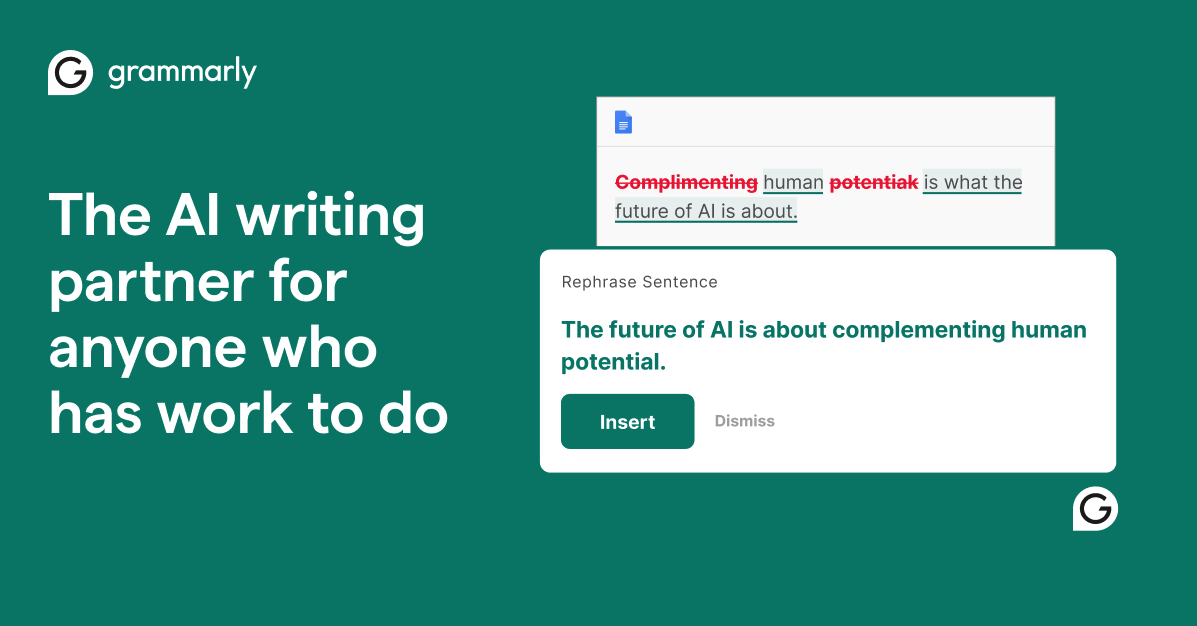
AI-powered writing assistant for grammar, clarity, and tone
- Real-time grammar, spelling, and punctuation correction
- Tone detection and adjustment
- Full-sentence rewrite suggestions
Quillbot
AI paraphrasing, grammar checking, and writing assistant for students
- AI paraphrasing with 7 distinct writing modes
- Grammar checker with advanced rewrite suggestions
- Text summarizer in bullet point and paragraph formats

Consensus
AI-powered academic search that synthesizes findings from peer-reviewed papers
- Natural language search across 200M+ academic papers
- AI-synthesized answers with inline citations
- Consensus Meter showing research agreement levels

Quizlet AI
AI-enhanced study platform with flashcards, practice tests, and AI tutor
- Q-Chat AI tutor with Socratic-style conversations
- Magic Notes converting text into flashcards and tests automatically
- Spaced repetition algorithm optimizing review timing

Photomath
Scan math problems with your camera for instant step-by-step solutions
- Camera scanning for printed and handwritten math problems
- Step-by-step solutions with multiple solving methods
- Animated visual walkthroughs for each step

DeepSeek
Open-source Chinese AI with reasoning capabilities rivaling the best
- DeepSeek-R1 chain-of-thought reasoning model
- DeepSeek-V3 general-purpose model
- Fully open-source model weights (MIT license)
The Short Answer
NotebookLM is the best free study tool — upload your notes and it becomes a tutor that actually knows your course material. ChatGPT is the best general-purpose study companion. Wolfram Alpha is essential for STEM. All three are free or nearly free.
Quick Picks
NotebookLM — best study assistant (free). ChatGPT — best all-purpose helper. Wolfram Alpha — best for math/science. Grammarly — best for writing. Duolingo — best for languages.
Detailed Reviews
1. NotebookLM — Best for Study Material Review
NotebookLM lets you upload lecture notes, textbooks, and papers, then ask questions and get answers grounded in your specific study materials. The audio overview feature creates podcast-style discussions of your content. It functions like a personal tutor who has read all your course materials. Completely free with a Google account.
2. ChatGPT — Best General Study Companion
ChatGPT serves as a versatile study companion that can explain concepts, generate practice questions, help brainstorm essay ideas, and tutor you through difficult material. The free tier is capable enough for most student needs. Use it to understand concepts, but always verify answers against authoritative sources — AI can make factual errors.
3. Duolingo — Best for Language Courses
Duolingo's adaptive learning algorithm adjusts difficulty to your level and targets your weaknesses. The AI conversation practice feature provides realistic dialogue exercises. With 40+ languages and a gamified approach that motivates consistent study, it complements formal language coursework effectively. Free with ads; premium removes them.
4. Wolfram Alpha — Best for STEM Problem Solving
Wolfram Alpha is essential for STEM students. It solves mathematical equations, analyzes data sets, computes physics and chemistry problems, and provides step-by-step solutions that show the process. The Pro plan ($7.25/month for students) unlocks detailed solution steps that help you learn the methodology, not just get the answer.
5. Grammarly — Best for Academic Writing
Grammarly catches grammar, style, and clarity issues in essays and papers. The AI suggestions help students develop stronger academic writing habits over time. The plagiarism checker provides peace of mind before submission. The free tier covers essential grammar checking; the student discount makes premium affordable.
6. QuillBot — Best for Paraphrasing
QuillBot helps students rephrase source material in their own words, reducing the risk of inadvertent plagiarism. The summarizer condenses long readings into key points for efficient review. The citation generator supports APA, MLA, and Chicago formats. The free tier handles basic paraphrasing; premium adds more modes and longer inputs.
7. Consensus — Best for Research Papers
Consensus searches millions of peer-reviewed papers to answer research questions with evidence-based summaries. For students writing research papers, it quickly surfaces relevant studies and shows the strength of scientific consensus on any topic. It provides citations you can follow to primary sources. Free tier available.
8. Quizlet AI — Best for Flashcard-Based Study
Quizlet uses AI to optimize flashcard-based studying with adaptive practice that focuses on concepts you find hardest. The AI generates flashcard sets from your notes and provides multiple study modes. For subjects that require memorization — vocabulary, anatomy, historical dates — it remains the most effective approach.
9. Photomath — Best for Math Homework Help
Photomath lets you photograph math problems and receive step-by-step solutions with explanations. The AI breaks down each step so you understand the methodology. It covers arithmetic through calculus and is particularly useful for checking your work and understanding where you went wrong. Free with premium features available.
10. DeepSeek — Best Free AI for Students
DeepSeek provides a completely free AI chatbot with strong reasoning abilities. For students on tight budgets, it offers math, coding, and analytical capabilities that rival paid alternatives. The unlimited free access makes it sustainable for daily academic use throughout a semester.
How We Chose These Tools
We evaluated each tool based on its educational value, accuracy, accessibility to students, pricing, and alignment with ethical academic use. We prioritized tools that help students learn rather than simply complete assignments, and tested with real coursework across multiple academic levels.
Key Considerations When Choosing
- Academic integrity: Use AI to learn, not to substitute your own work; understand your institution's AI policy
- Accuracy verification: Always verify AI-generated information against textbooks and authoritative sources
- Cost: Prioritize free tools and student discounts; many AI tools offer academic pricing
- Privacy: Be cautious about uploading personal information or proprietary course materials
- Learning vs. completing: The best AI tools help you understand concepts, not just get answers
- Subject coverage: Verify the tool supports your specific academic discipline
100+ free AI tools
Writing, PDF, image, and developer tools — all in your browser.
Frequently Asked Questions
Is it cheating to use AI tools for schoolwork?
It depends on how you use them and your institution's policy. Using AI to understand concepts, generate practice problems, or check grammar is generally acceptable. Having AI write your assignments is academic dishonesty. Always follow your school's specific AI policy and use AI to learn, not to shortcut learning.
What is the best free AI tool for studying?
NotebookLM is the best free study tool — upload your materials and interact with them through AI. DeepSeek offers free AI chat for explanations and practice problems. Wolfram Alpha's free tier handles basic math. Quizlet's free tier provides AI-enhanced flashcard studying.
Can AI help with math homework?
Wolfram Alpha and Photomath both solve math problems with step-by-step explanations. The key is using them to understand the methodology, not just copy answers. Work through problems yourself first, then use AI tools to check your work and understand where you made mistakes.
Disclosure: Some links on this page may be affiliate links. We may earn a commission if you make a purchase through these links, at no additional cost to you.